

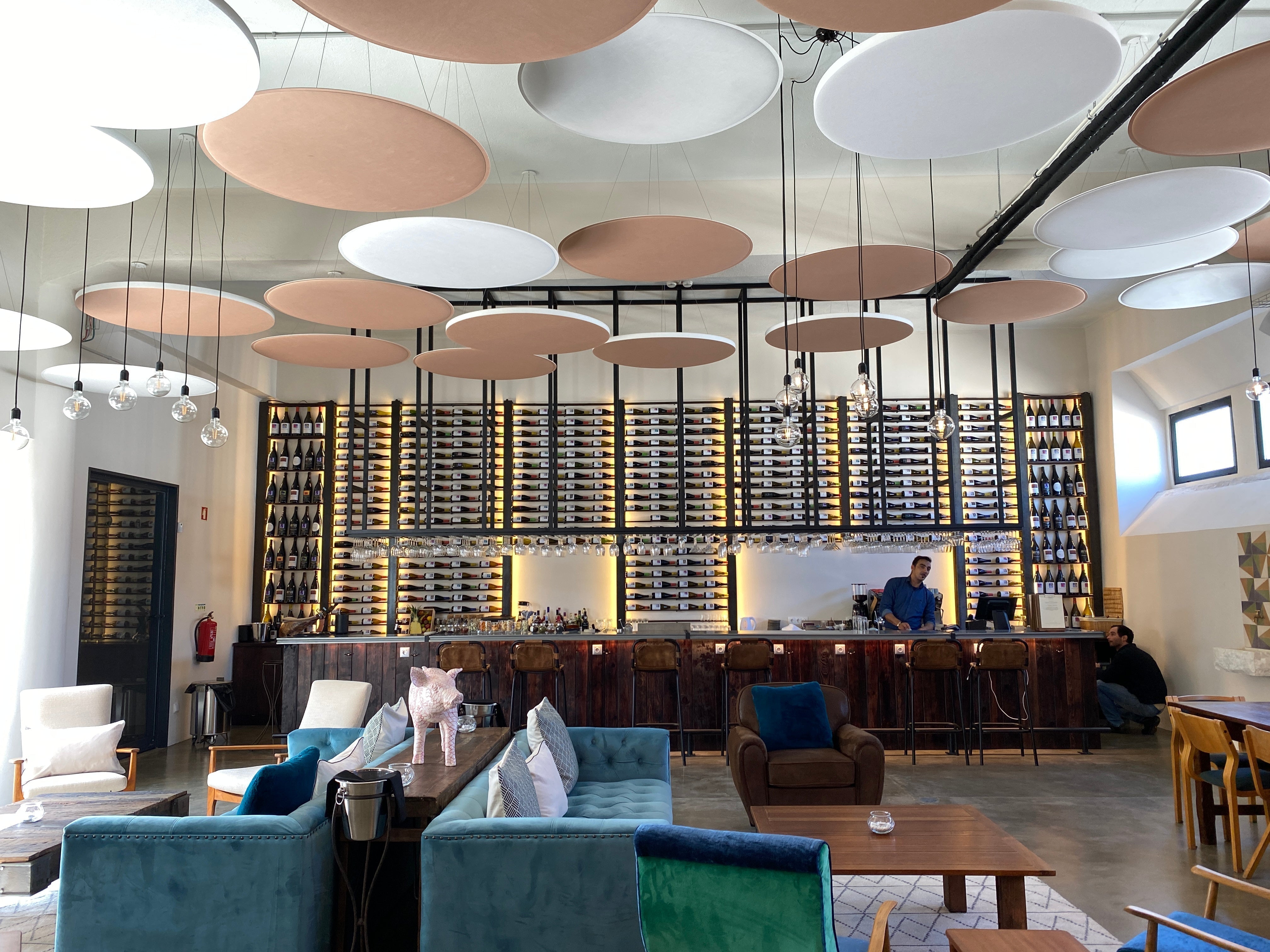
Background noise is one of the most common and damaging problems in restaurant environments, directly affecting guest comfort and overall experience. A study by RNID shows that nearly 80% of people have left hospitality venues early because of excessive noise. Poor acoustics do not just affect comfort, they also impact reviews, return visits and overall business performance.

What Causes Background Noise in Restaurants?
Most restaurant noise problems come from the same root causes:
- High reverberation: sound bouncing off hard surfaces before it fades.
- Lombard Effect: guests raising their voices in response to noise, amplifying the overall sound level.
- Reflective materials: glass, concrete, stone and metal, which are common in modern hospitality design.
-
Poor acoustic balance: a space that is either over or under treated.
In many cases, these factors act together, which is why a moderately busy restaurant can quickly become acoustically uncomfortable.
1. Treat the Ceiling First: Where Most Sound Problems Begin
How to Reduce Background Noise in a Restaurant
The ceiling is usually the most important surface in restaurant acoustic design. It is often the largest uninterrupted reflective surface in the room and one of the main contributors to reverberation build-up.
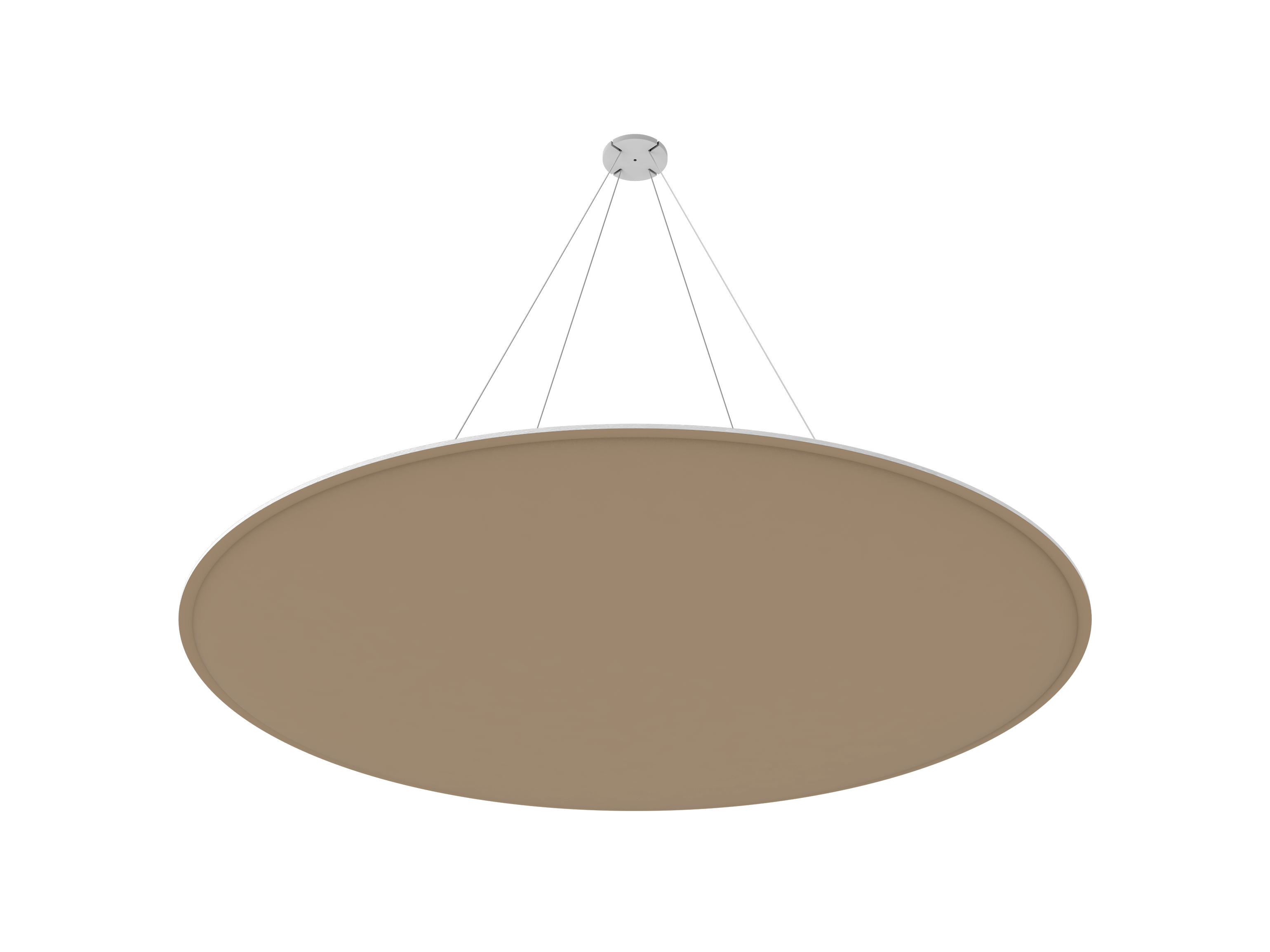
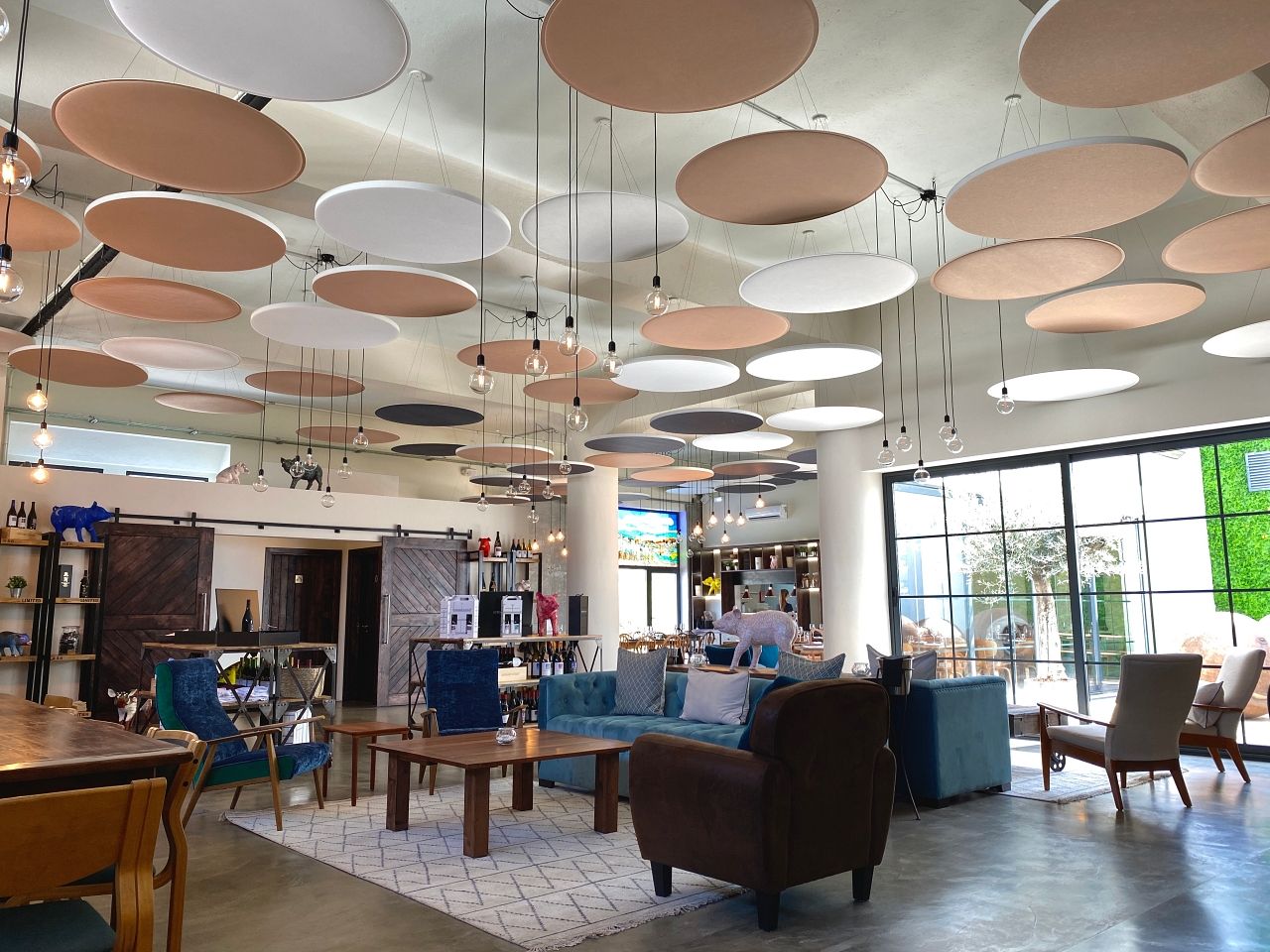
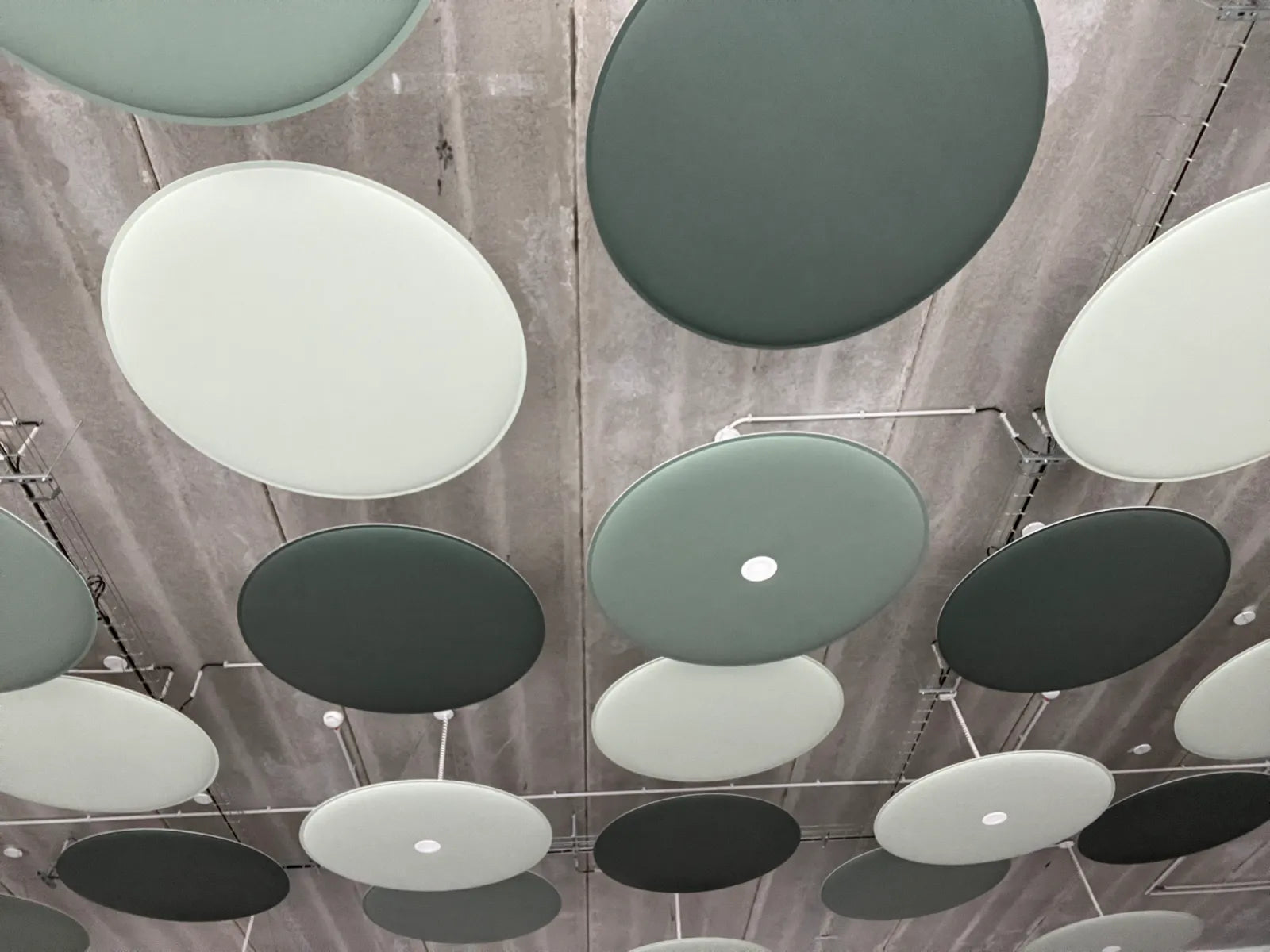
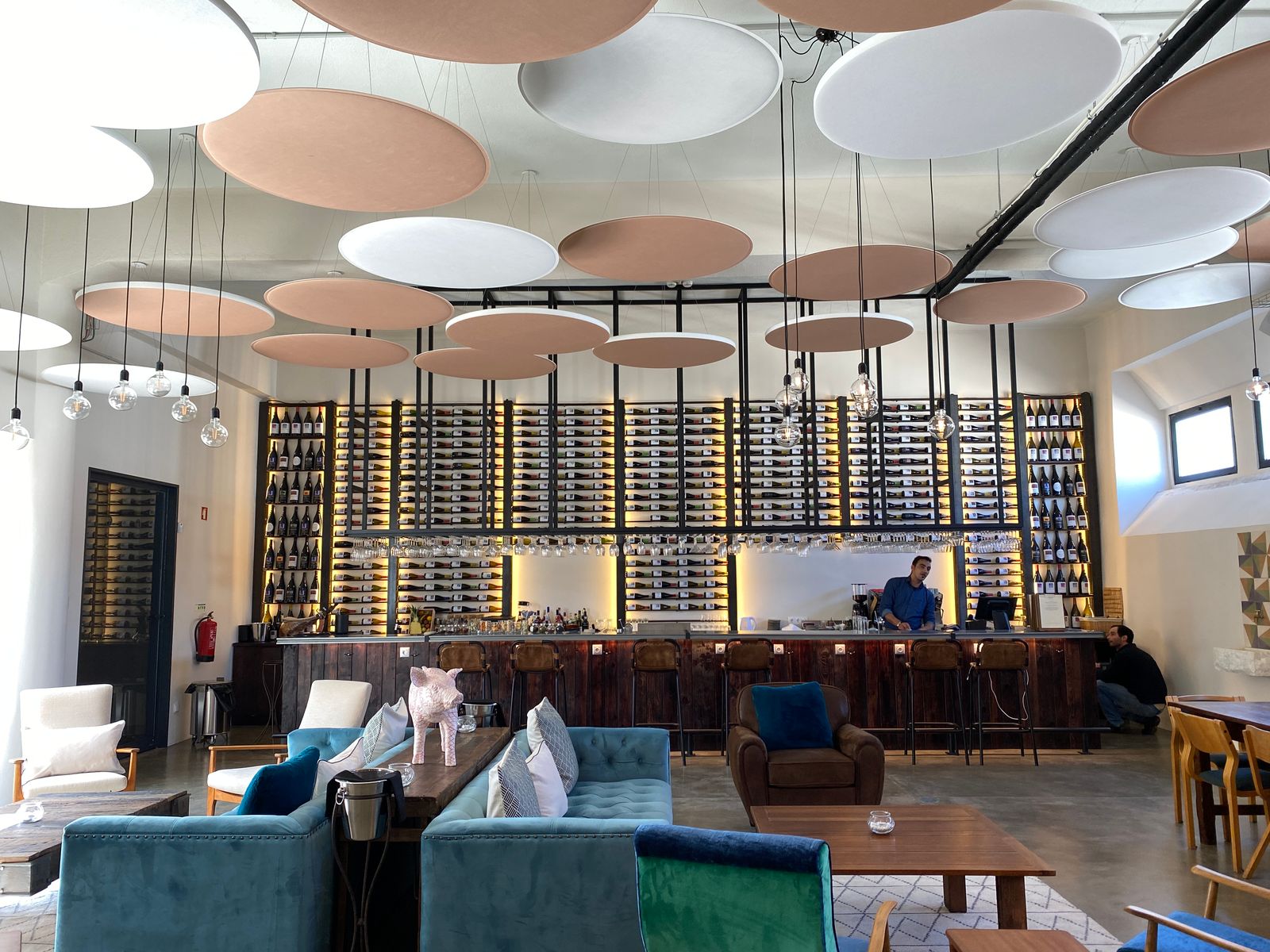
Installing acoustic treatment on the ceiling, especially suspended acoustic clouds, is often the most effective first step in reducing background noise.
Recommended acoustic solutions for restaurant ceilings:
- ViClouds VMT: lightweight suspended acoustic clouds with photorealistic VMT finishes; ideal for high ceilings and open dining areas.
- Flat Panel VMT: flat ceiling-mounted panels with high absorption performance and a wide range of visual finishes.

Discover this project: Howard's Folly Restaurant & Visit Centre
2. Add Wall Treatment in Key Areas
Why a Single Surface Is Not Enough
Treating only one surface in a restaurant is often not enough to control noise effectively. While ceiling treatment is usually the first and most impactful step, untreated wall reflections can still contribute significantly to noise build-up and reduced speech clarity.
A more balanced approach, combining ceiling and wall absorption, helps distribute acoustic treatment more evenly across the space, reducing strong reflections and improving overall acoustic comfort.
Best acoustic panels for restaurant walls:
- Flat Panel VMT for absorption with a clean, adaptable design
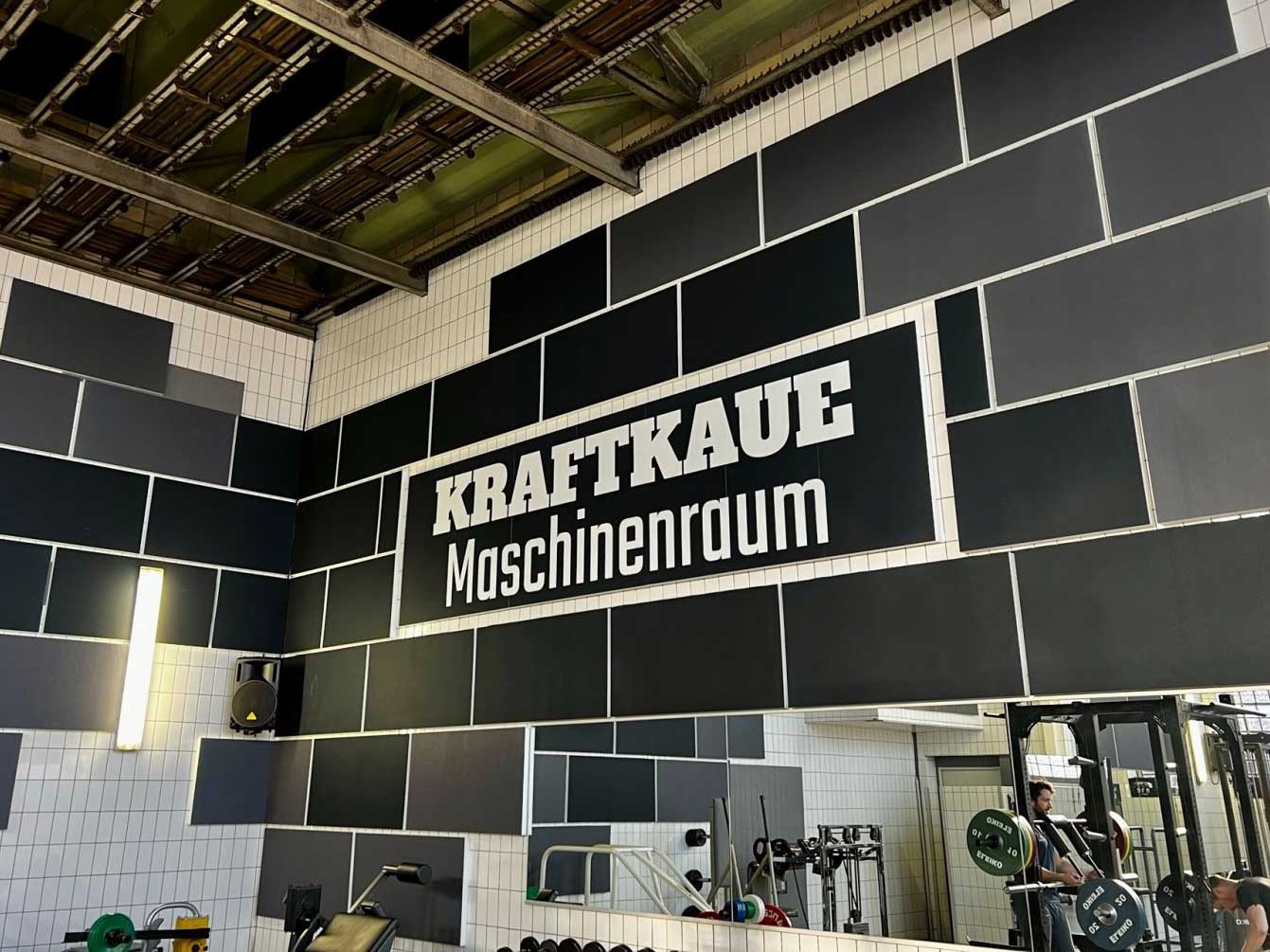
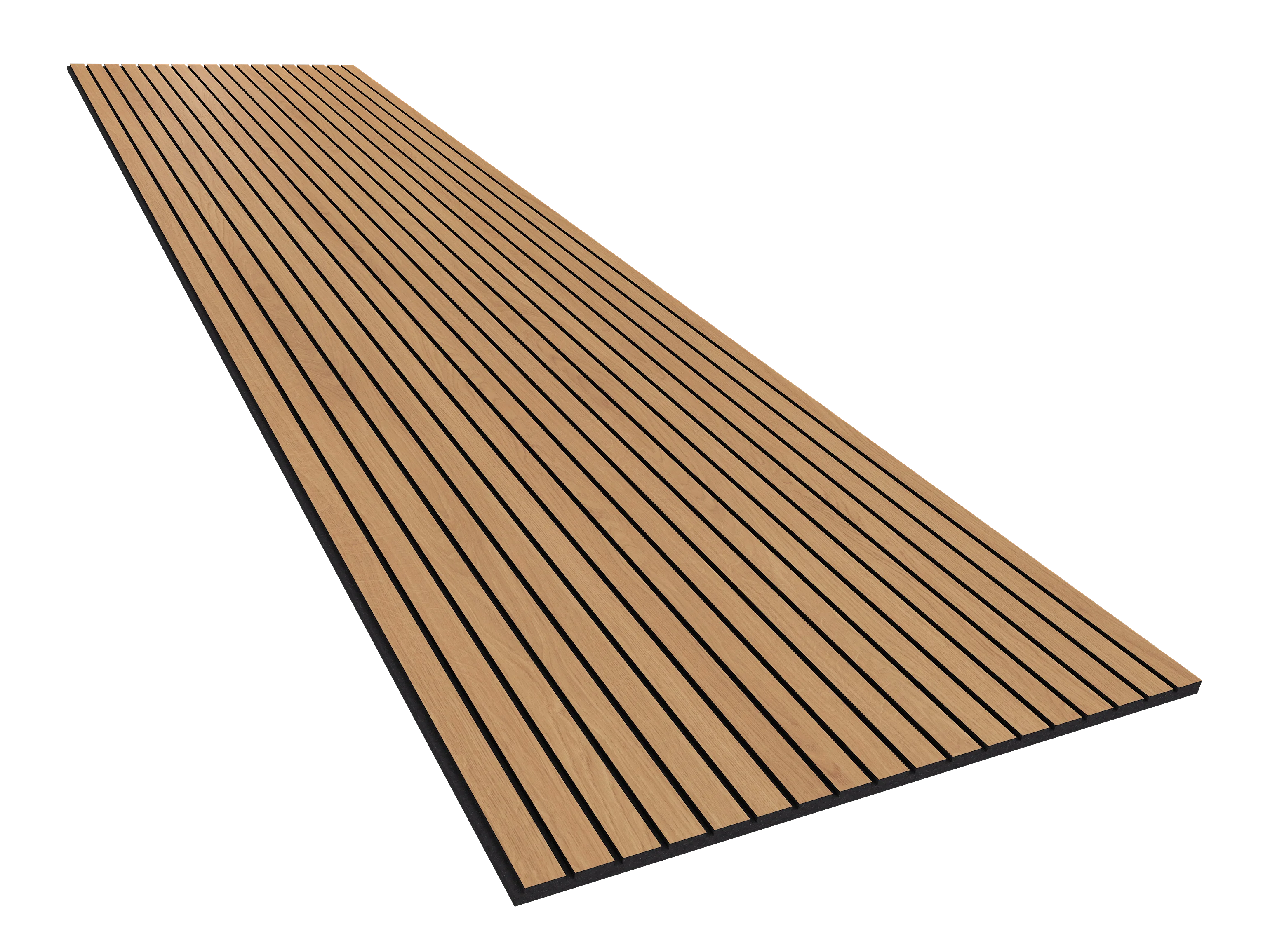
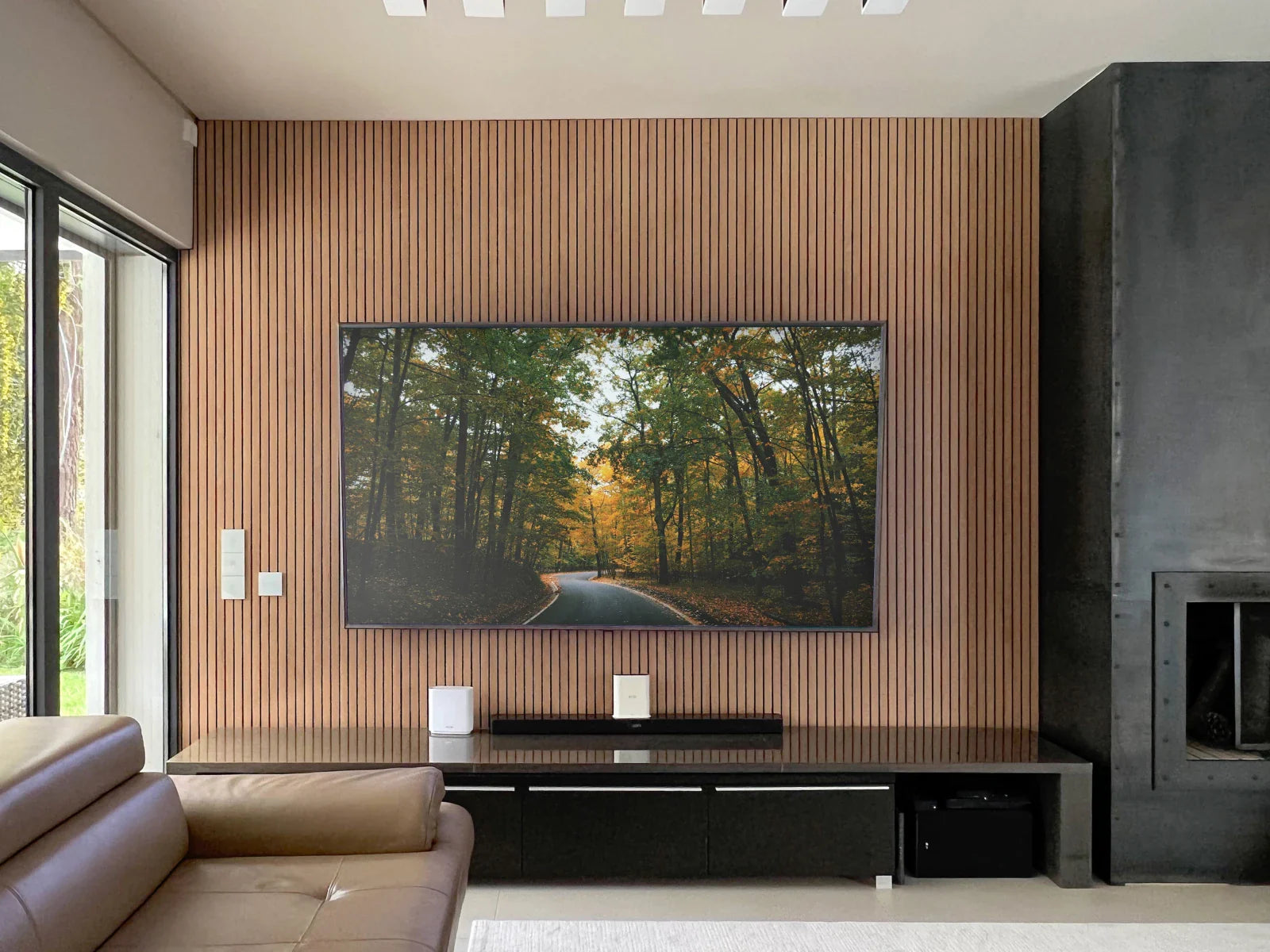
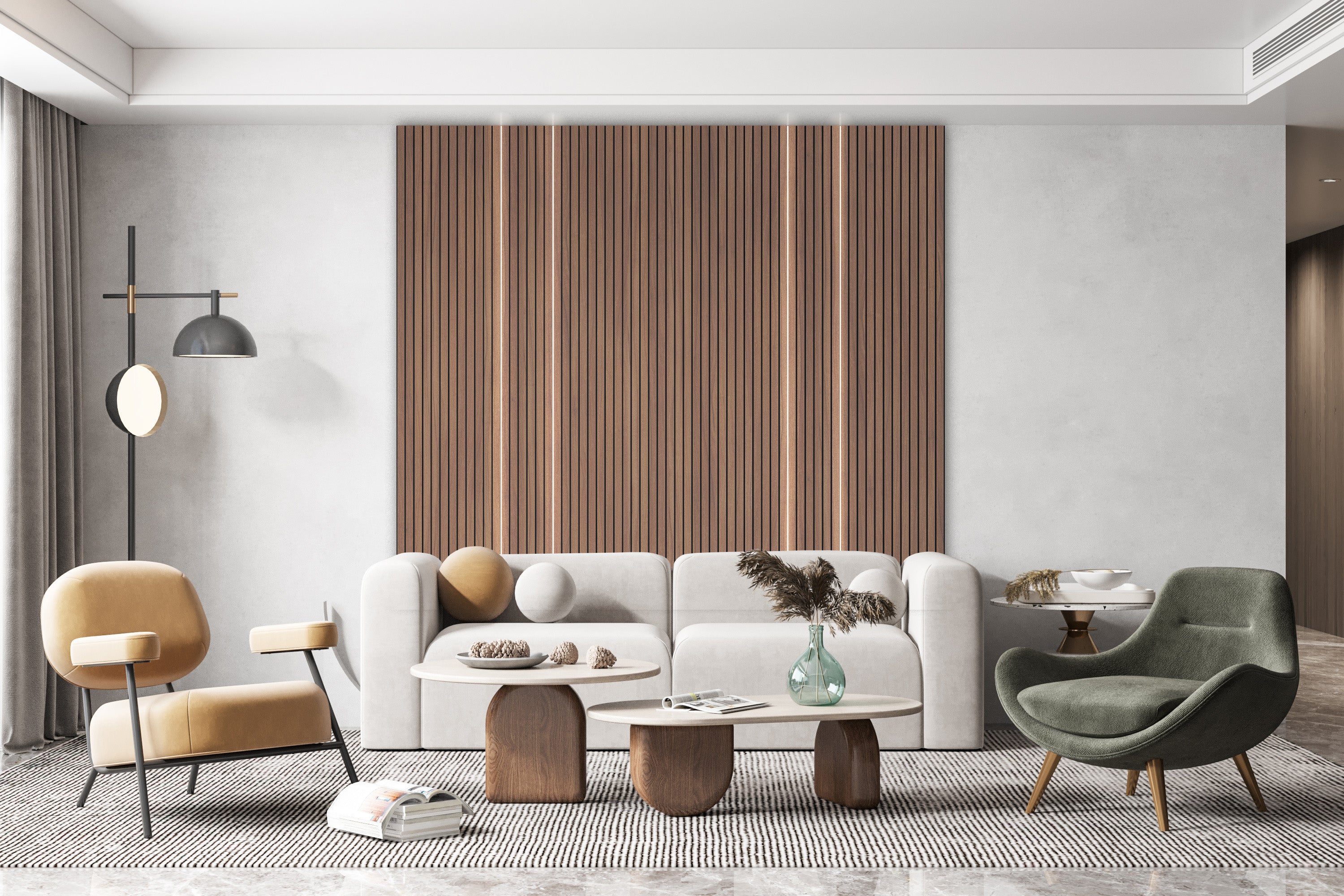
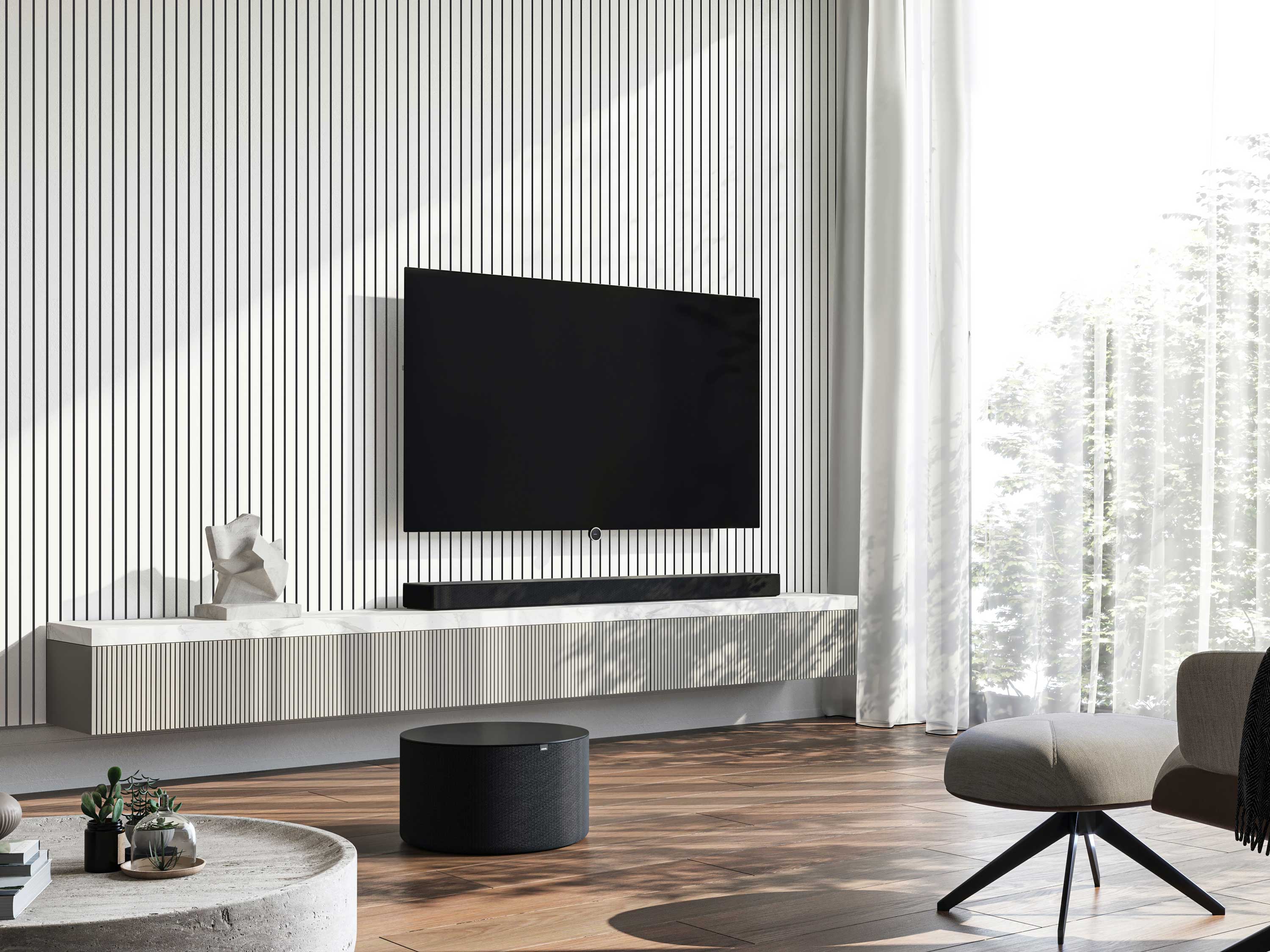
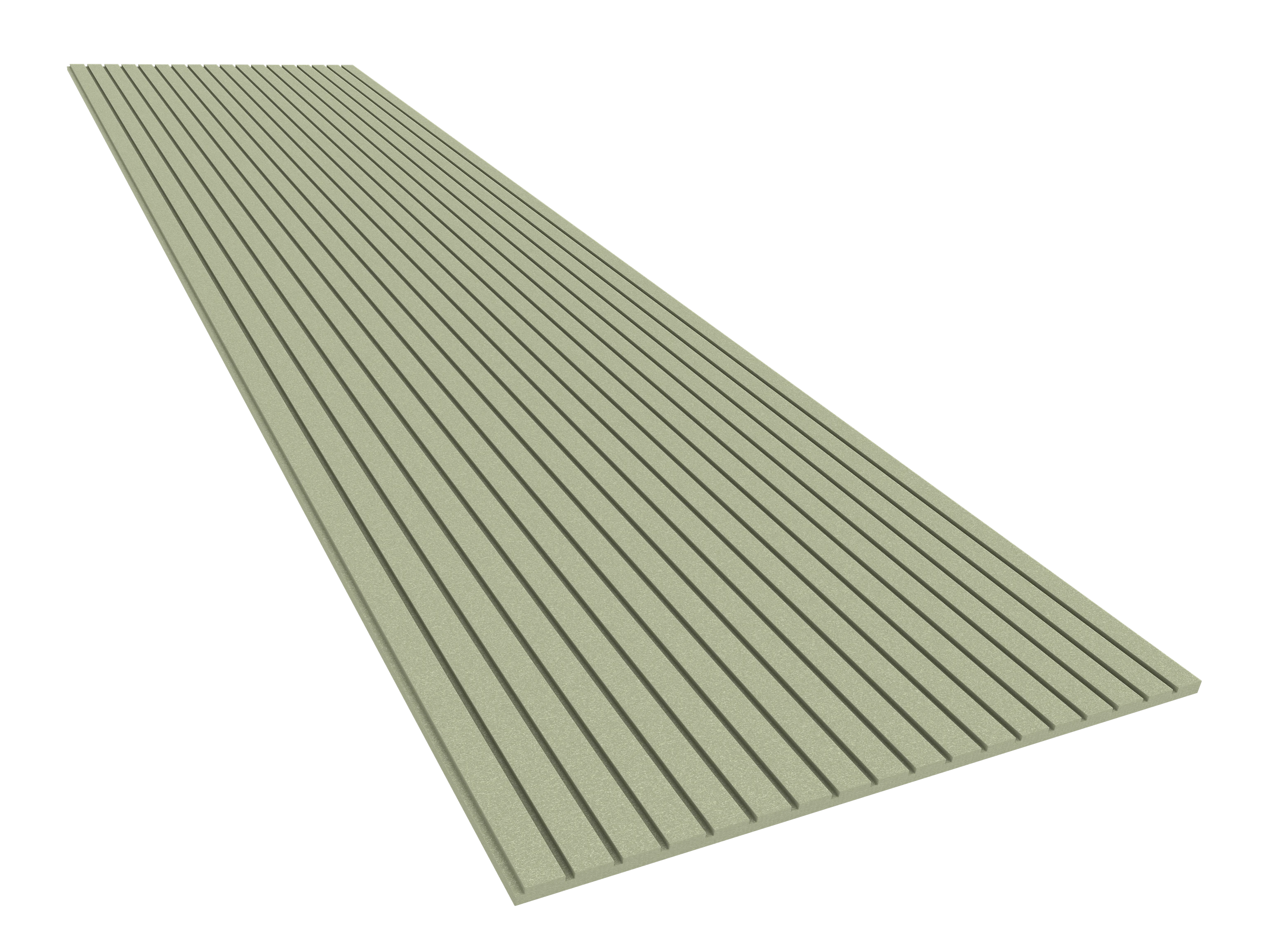
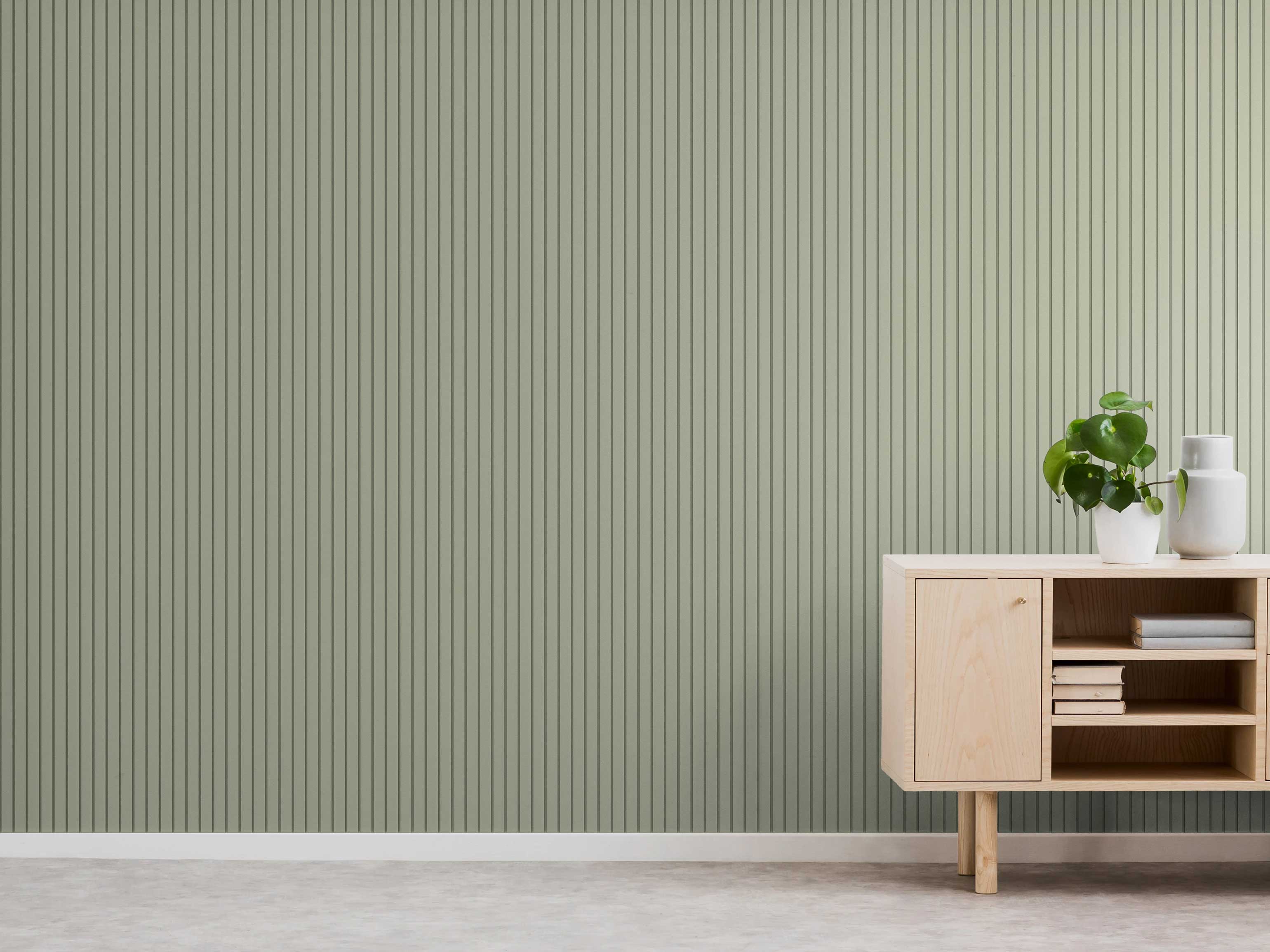
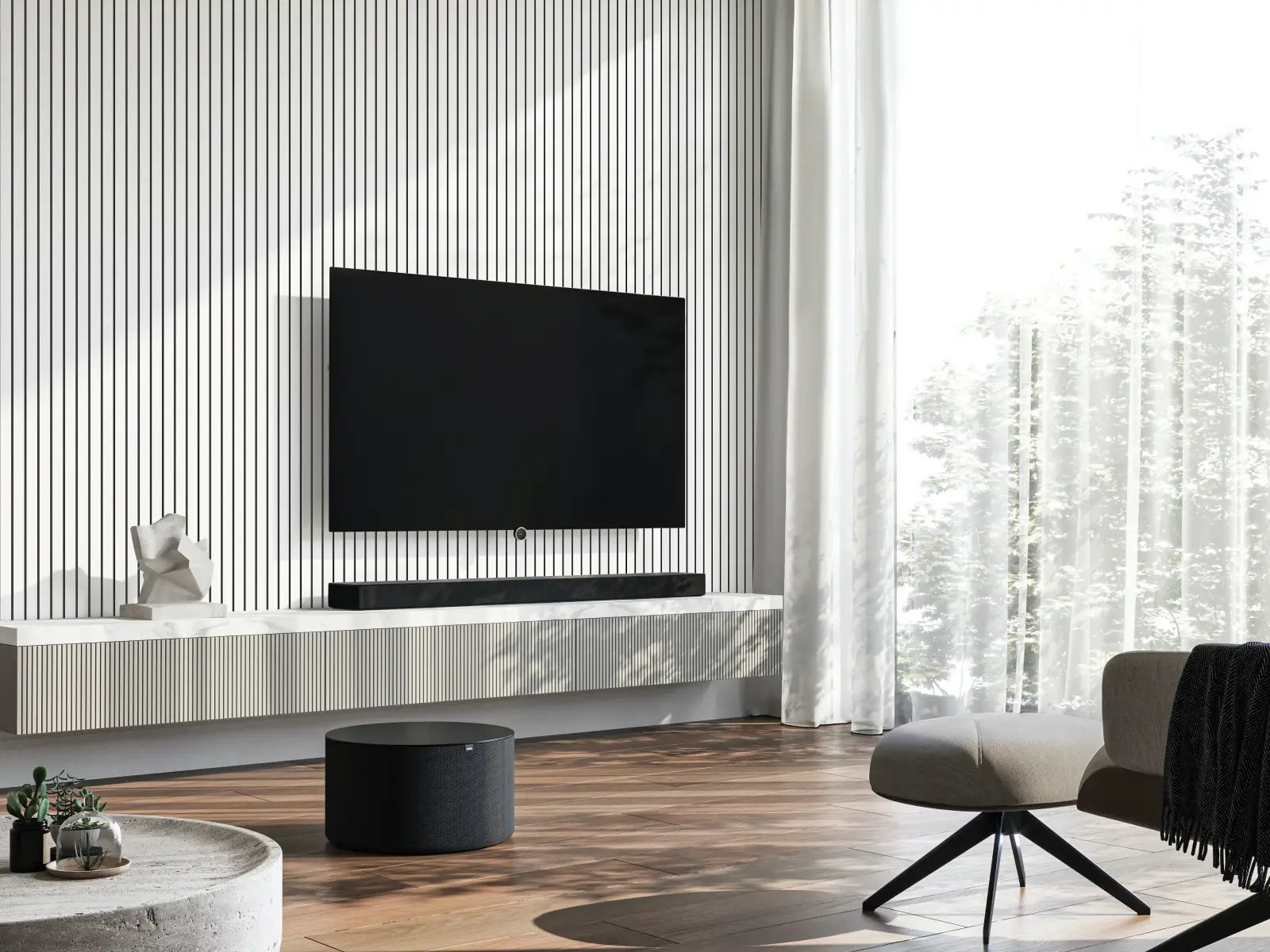
- VicStrip and VicStrip Lite for flexible wall coverage, ideal for feature walls and large vertical surfaces.

Get to know: The VicStrip wall of Oblicuo Hi-Fi Bar
3. Control the Lombard Effect
Why Restaurants Become Louder Over Time
There's a well-documented phenomenon in acoustic science called the Lombard Effect. As the ambient noise level in a room rises, people instinctively raise their voices to be heard above it. This creates a feedback loop in which rising noise levels cause guests to speak louder, increasing the overall sound level even further.
This is why a restaurant may feel comfortable at low occupancy but become overwhelming as it fills up, not just because of the number of people, but because the room keeps amplifying every voice.
The solution is to apply balanced acoustic absorption across ceilings and walls, controlling reflections early and reducing the noise build-up cycle.
Best acoustic panels for controlling the Lombard Effect:
- VicStrip: modular wall panels designed for fast, flexible coverage; ideal for side walls and feature walls in busy restaurant environments.
- VicStrip Lite: a lighter-weight version for more subtle or design-sensitive applications.
-
Flat Panel VMT + ViClouds VMT in combination: a ceiling + wall approach that addresses reflections from multiple angles simultaneously.
4. Integrate Acoustic Treatment with Interior Design
Acoustic Solutions That Support the Interior Concept
A common misconception is that acoustic treatment has to look technical or visually intrusive. In hospitality spaces, the most effective solutions are those that improve acoustics without compromising the visual identity of the interior.
This is where UniVicoustic’s acoustic solutions make all the difference. VMT panels use photorealistic printing technology to replicate the textures of stone, wood, concrete, brick and other natural materials, allowing acoustic treatment to blend naturally into the design concept.
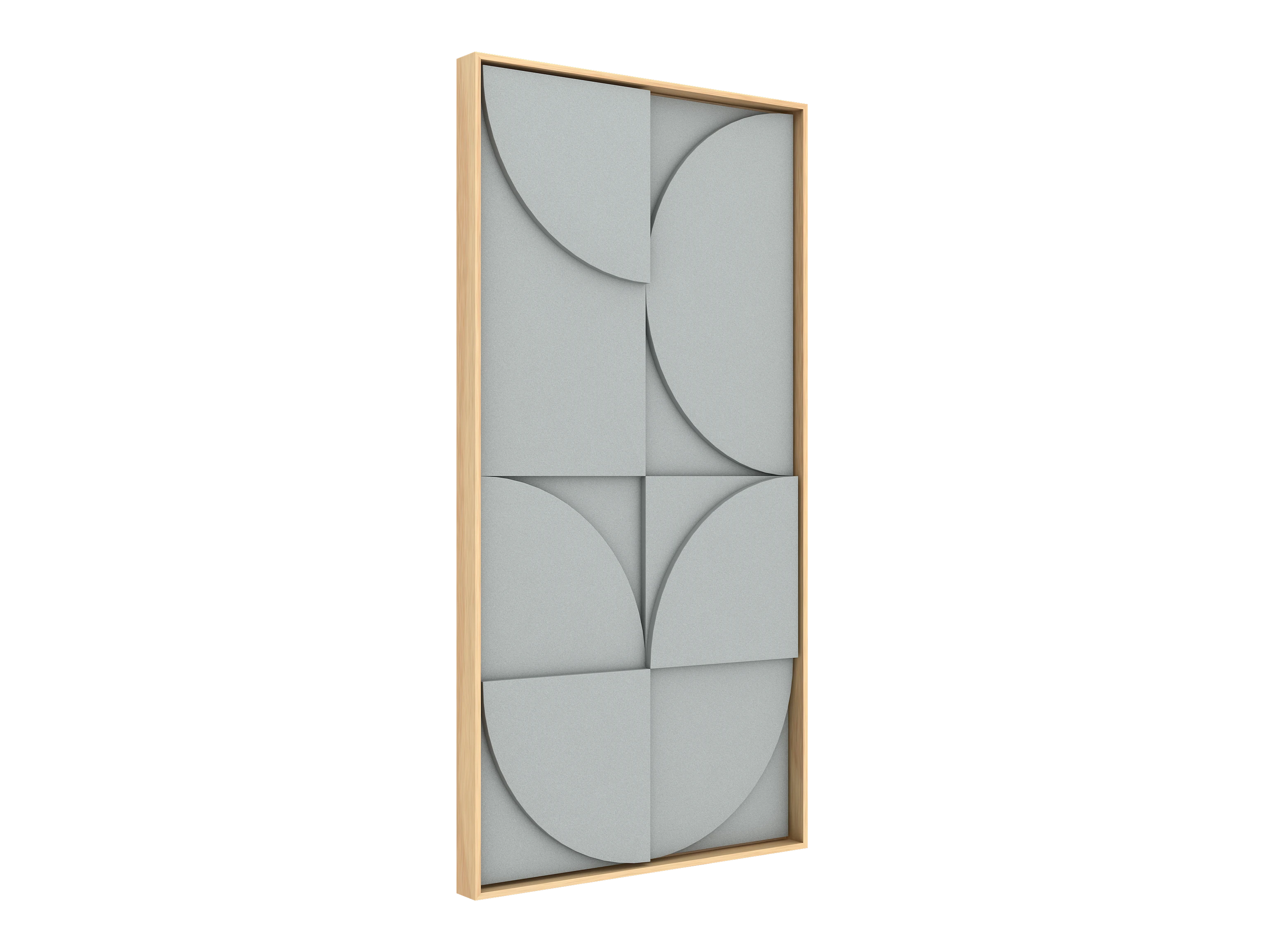
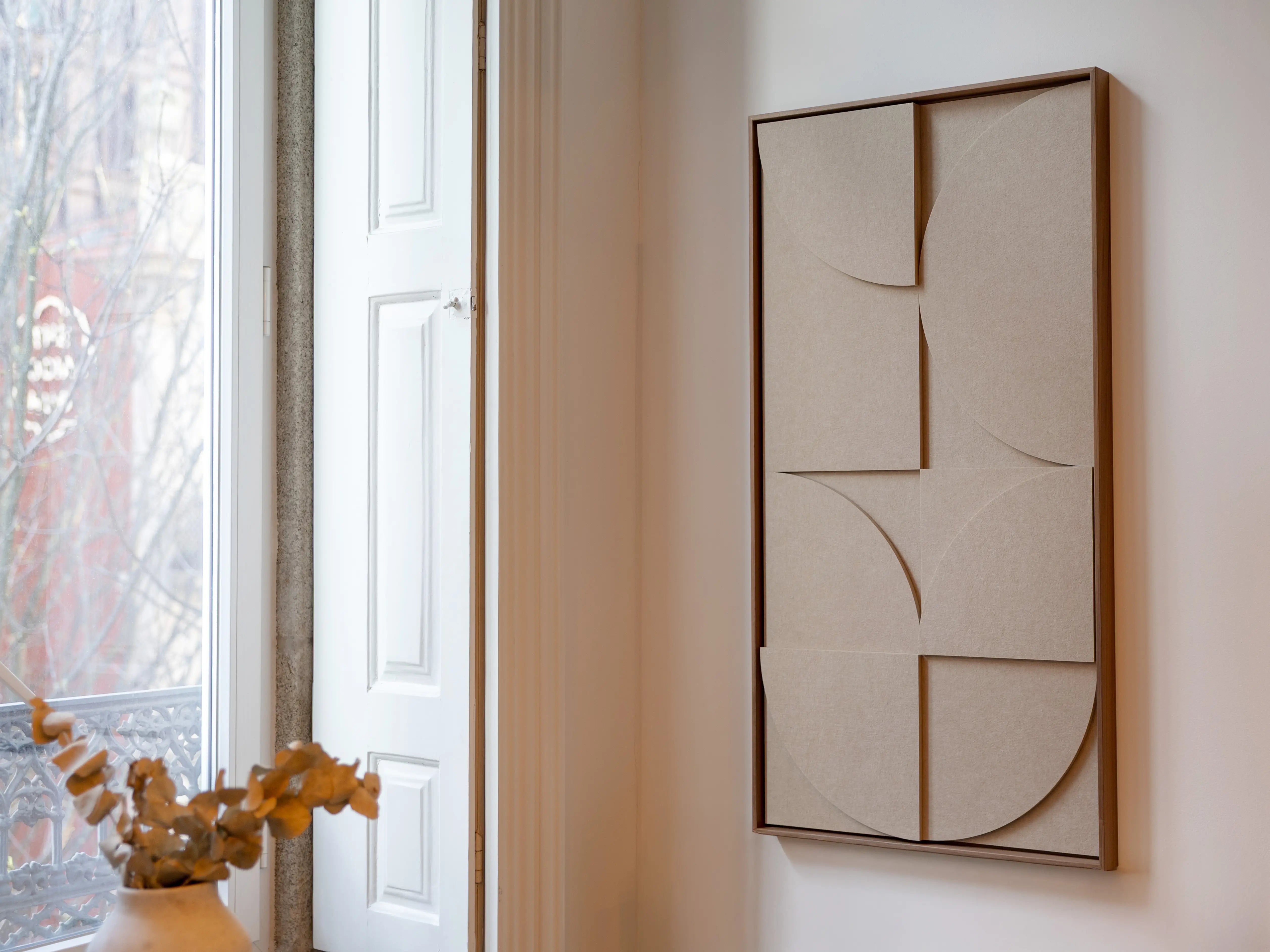
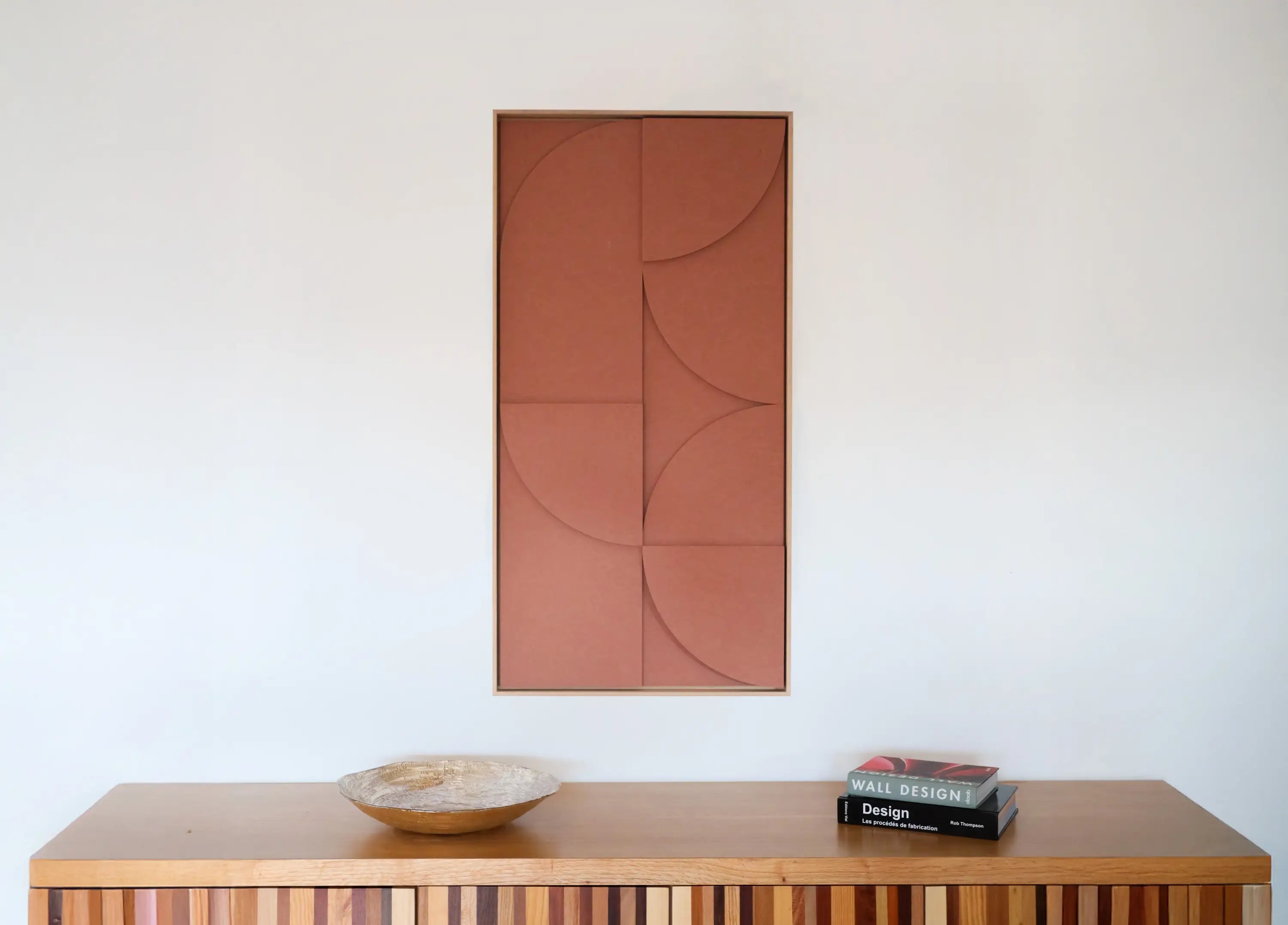
For projects where acoustic treatment can also become a visual feature, solutions such as VicShape 3D, EchoFrame Collection or VicTiles 3d MidMod transform acoustic panels into bespoke wall art. These products absorb sound while also functioning as feature installations, giving hospitality designers a way to combine acoustic performance with interior identity.

5. Balance Absorption for the Right Acoustic Atmosphere
How Much Acoustic Treatment Does a Restaurant Actually Need?
Over-treating a restaurant can remove too much sound energy, making the space feel flat, less vibrant and with reduced speech privacy. Under-treating, on the other hand, leaves the room noisy and acoustically uncomfortable.
- A fine dining restaurant may target a lower RT (0.7–0.9 s) for a more intimate, quiet feel.
- A lively bistro or bar may target a slightly higher RT (0.9–1.2 s) to preserve energy and buzz.
- A hotel restaurant may require a mixed approach depending on the zones (dining vs lounge vs bar).
A mixed panel strategy, combining ceiling-suspended clouds with wall-mounted panels at different coverage densities, gives you precise control over the final acoustic result.
This is exactly why UniVicoustic offers acoustic project design services: our senior acoustic engineers model the space digitally, calculate the optimal RT, and specify the right panels in the right positions before installation begins.
Restaurant acoustics are not just about comfort. They directly influence communication, atmosphere and customer satisfaction.
Ready to Solve Your Restaurant's Noise Problem?
Whether you're designing a new venue from scratch or retrofitting an existing space, UniVicoustic has the acoustic expertise and product range to help you get the result right.






Share:
Vicoustic Featured in Home Theater Tech Magazine: A Multi-Million-Yuan Acoustic Masterpiece in Shanghai
Acoustic Panels for Recording Studios: How to Treat Bass, Absorption, and Diffusion