


“Absorption” and “insulation” are two of the most confused terms in acoustic, and mixing them up is one of the easiest ways to spend money on the wrong solution. They may sound similar, and both are part of acoustic design, but they solve two fundamentally different problems.
UniVicoustic makes this distinction clear: sound absorption is not sound insulation.
Here is the simplest way to keep them apart:
Sound absorption changes how a room sounds on the inside. Sound insulation reduces the transmission of sound between spaces.
If you only remember one line, remember that one.
A simple way to picture it
Think about any room and the sound inside it.
Absorption is about what happens to sound already inside the room: the echo, clarity and overall acoustic character. Absorptive surfaces reduce the amount of sound energy reflected back into the space, helping the room sound calmer and clearer.
Insulation is about the building enclosure: walls, floors, ceilings, doors and other separating elements acting as barriers to reduce sound transmission between spaces.
One shapes the sound you hear inside a room. The other controls how much sound passes between rooms.

What is sound absorption?
When a sound wave reaches a surface, part of its energy is reflected and part may be absorbed. Sound absorption is the portion of the incident acoustic energy that is absorbed rather than returned to the room.
In porous or fibrous absorptive materials, sound penetrates the material and causes air movement within its structure. Friction converts part of the acoustic energy into a small amount of heat, reducing the energy returned to the room.
This is why materials such as mineral wool, fibreglass, acoustic foams and textile-based materials can be effective absorbers. UniVicoustic also uses VicPET Wool, a non-woven material predominantly made from recycled plastic bottles, in a range of acoustic products.
Why does this matter?
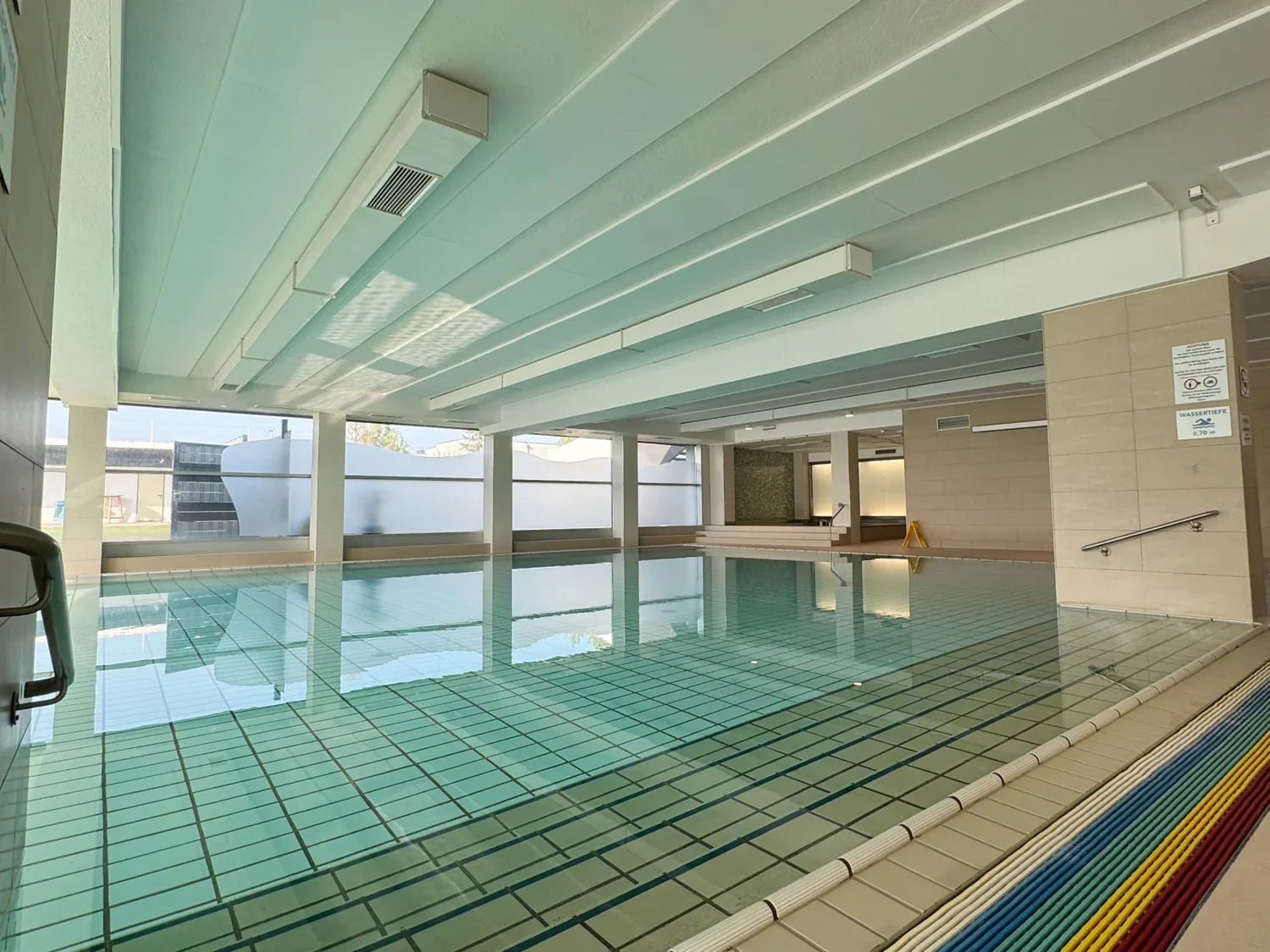
Hard, reflective surfaces such as glass, concrete and plasterboard can return a significant amount of sound energy to the room. When many such surfaces are present, sound can remain audible through repeated reflections, creating reverberation.
Reverberation time (RT) describes how long it takes for sound to decay by 60 dB after the sound source has stopped. A long reverberation time can make speech less intelligible and a room feel noisy or echoey. Adding appropriate absorption reduces the reflected energy and can shorten the reverberation time.
Absorption is also frequency-dependent. Different materials, thicknesses, mounting conditions and air gaps provide different levels of absorption across the frequency range. Conventional porous absorbers are generally more effective at mid and high frequencies, while thicker or specially designed solutions are often required for effective low-frequency control.
Acoustic absorption performance is commonly expressed using the sound absorption coefficient (α). Other metrics, such as NRC, may also be used depending on the product and test method.
What is acoustic treatment?
Acoustic treatment refers to the measures used to control how sound behaves within a room. It can involve different approaches, including absorption, diffusion and low-frequency control, depending on the acoustic objectives.
Absorption reduces the amount of sound energy returned to the room, helping to control reverberation and reflections.
Diffusion, on the other hand, redistributes reflected sound energy in different directions rather than primarily absorbing it. This can help control reflections while maintaining a more natural and spacious acoustic character.
The choice between absorption, diffusion or a combination of both depends on the room, its intended use and the desired acoustic character.

What is sound insulation?
Sound insulation has a different purpose: reducing the transmission of sound from one space to another.
Its role is to limit sound traveling between rooms, helping prevent noise generated in one space from disturbing occupants elsewhere and reducing the amount of external noise entering a room.
This distinction is crucial. Absorptive panels can reduce reflections and reverberation inside a room, but they do not, on their own, provide significant sound insulation between rooms.
For airborne sound, sound insulation is primarily addressed through the construction and separation between spaces. Depending on the project, this can involve walls, floors, ceilings, acoustic doors, acoustic windows, decoupling systems, sealing details and other construction measures.
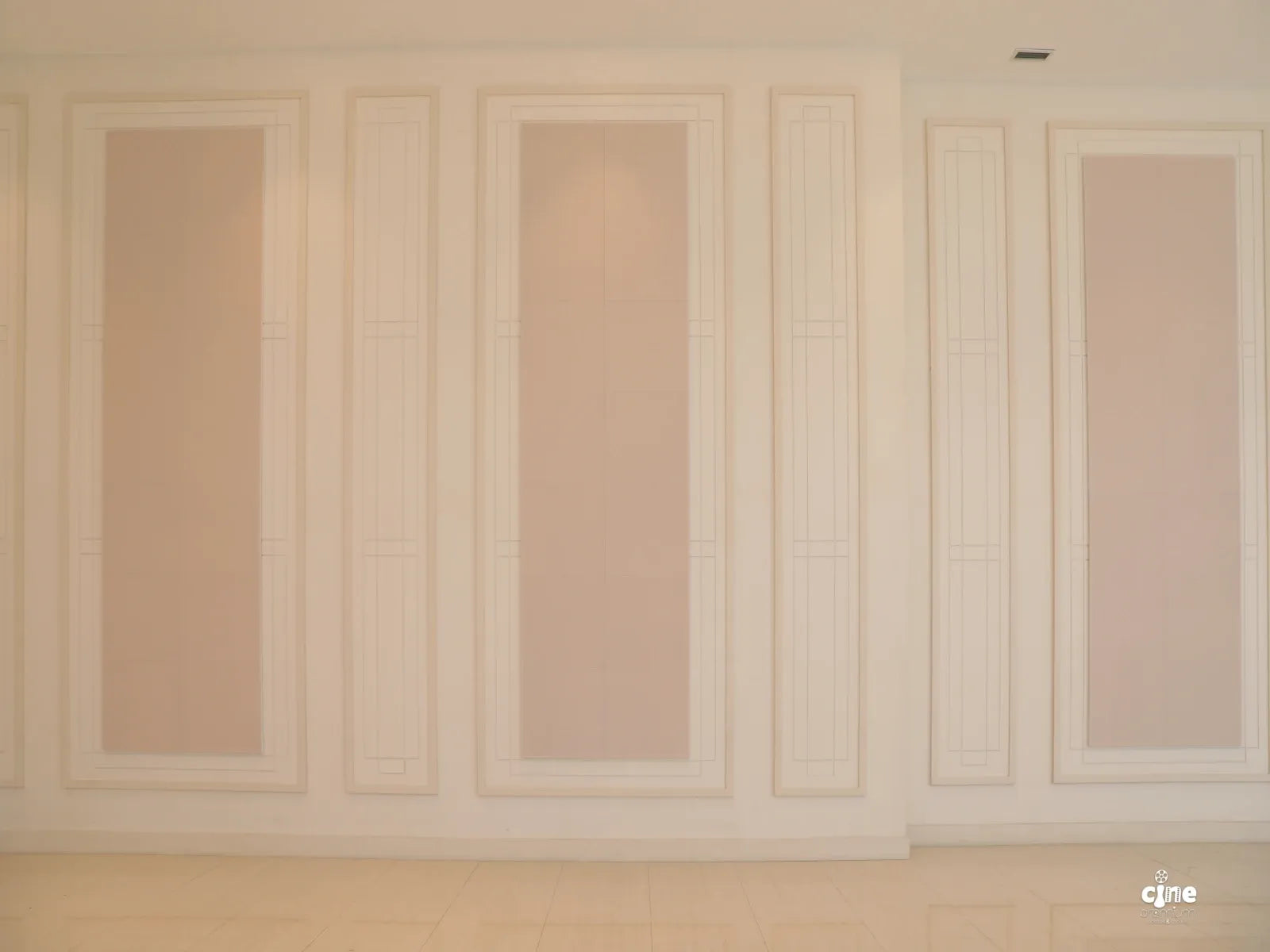
It helps to see where insulation sits within a complete acoustic design. When designing a demanding space such as a home cinema, there are several separate acoustic objectives:
- Internal acoustic treatment: controlling reverberation, reflections, flutter echoes and room modes.
- Background noise control: limiting unwanted noise from sources such as HVAC and building services.
- Sound insulation: reducing sound transmission between the room and adjacent or external spaces.
Absorption primarily addresses the first point. Sound insulation addresses the third.
One more clarification: sound insulation is not the same as thermal insulation. A material that is effective for thermal insulation is not automatically effective at preventing sound transmission. They are different physical requirements and should be assessed separately.
The key difference, at a glance
What it acts on – Absorption: sound within a single room. Insulation: sound traveling between rooms.
- The goal – Absorption: improve clarity, shorten reverberation, reduce echo and reduce the build-up of reflected sound. Insulation: reduce sound transmission into or out of a space.
- The problem it addresses – Absorption: “This room echoes and it’s hard to hear.” Insulation: “I can hear the room next door, and they can hear us.”
- What it involves – Absorption: acoustic panels and finishes applied to room surfaces, with performance commonly described using metrics such as α or NRC. Insulation: construction-based measures such as walls, floors, ceilings, acoustic doors and acoustic windows, together with appropriate detailing and sealing.
Why the two get mixed up
Both are part of acoustics, and both can involve walls, ceilings and other building surfaces. It is therefore easy to assume that one can replace the other.
Two mistakes are especially common.
Expecting acoustic panels to soundproof a room.
Adding absorptive panels can make a room clearer and reduce reverberation, but it does not turn a standard wall into a sound-insulating construction. Reducing sound transmission requires an appropriate separating construction and attention to details such as doors, windows, junctions and flanking paths.
Assuming a well-insulated room will sound good.
A room can have excellent sound insulation and still be highly reverberant and uncomfortable inside. Insulation and internal acoustic treatment solve different problems.
For demanding spaces, both may be required: and they should be considered as separate parts of the acoustic design from the beginning.
You don’t actually want a “dead” room
More absorption is not automatically better.
An anechoic room, for example, is designed to minimize reflections to an extreme degree and is primarily used for specialized measurement and testing. A normal working, listening or entertainment space requires a different balance.
The objective is to create an acoustic environment appropriate to the room’s purpose, not simply to absorb as much sound as possible.
Absorbers can be combined with diffusers, controlled reflective surfaces and, where appropriate, variable acoustic elements. This allows the acoustic character of the room to be shaped rather than simply removing all reflections.
For example, VicTotem Ultra VMT combines an absorptive VMT face with a scattering laminate side, allowing different acoustic behaviors depending on its orientation.

Good acoustic treatment should make a room clear, comfortable and appropriate for its intended use, not simply “dead”.
Which one do offices and public spaces usually need?
For many offices, restaurants and other busy interiors, the most common acoustic complaint is not necessarily sound traveling between rooms. It is excessive reverberation and background noise making conversation difficult.
Hard, reflective interiors allow sound to remain in the space for longer. As background noise increases, people tend to raise their voices to be heard, which can increase the overall sound level even further. This phenomenon is known as the Lombard effect.
In offices, controlling reverberation can also contribute to better speech privacy by reducing the propagation of reflected speech within the space.
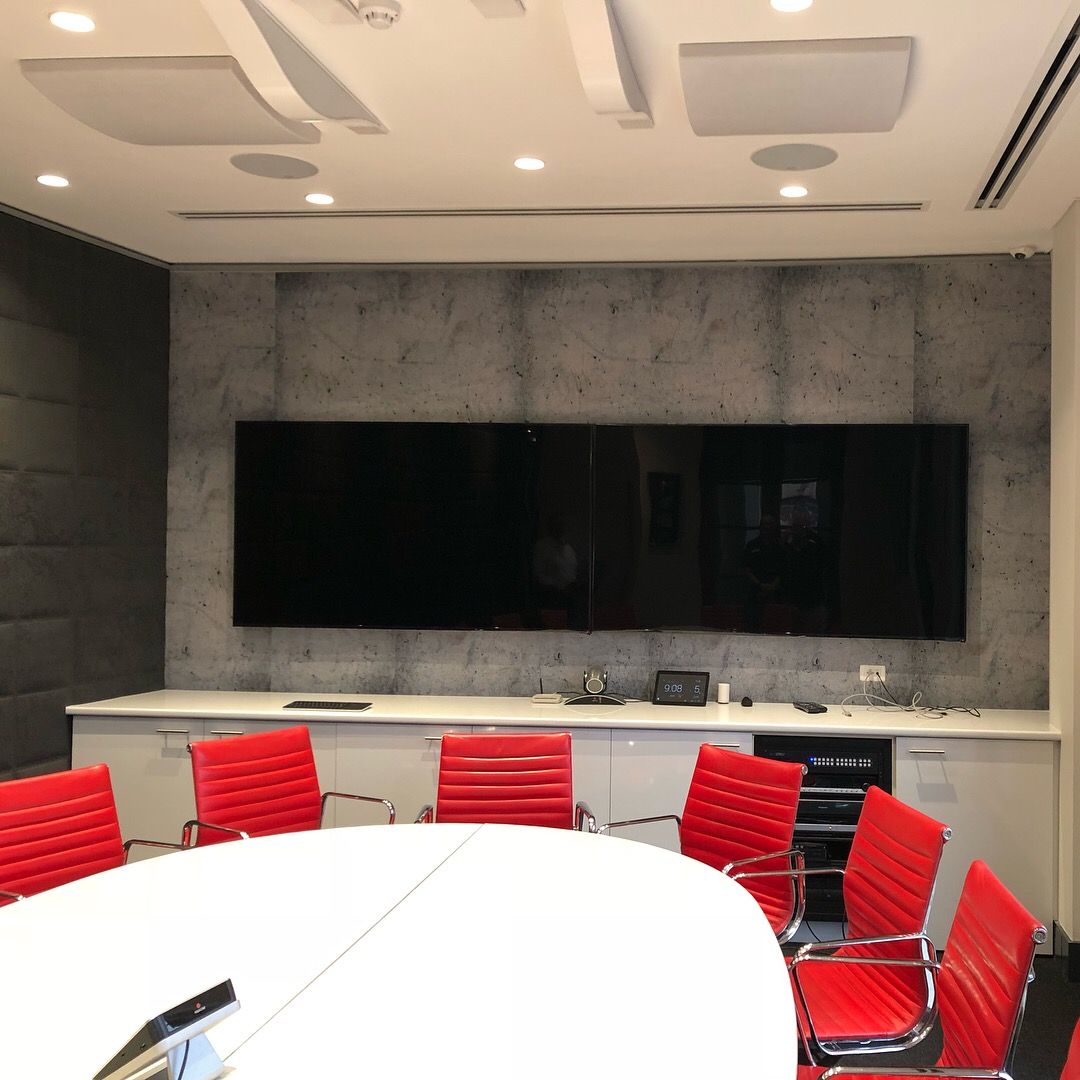
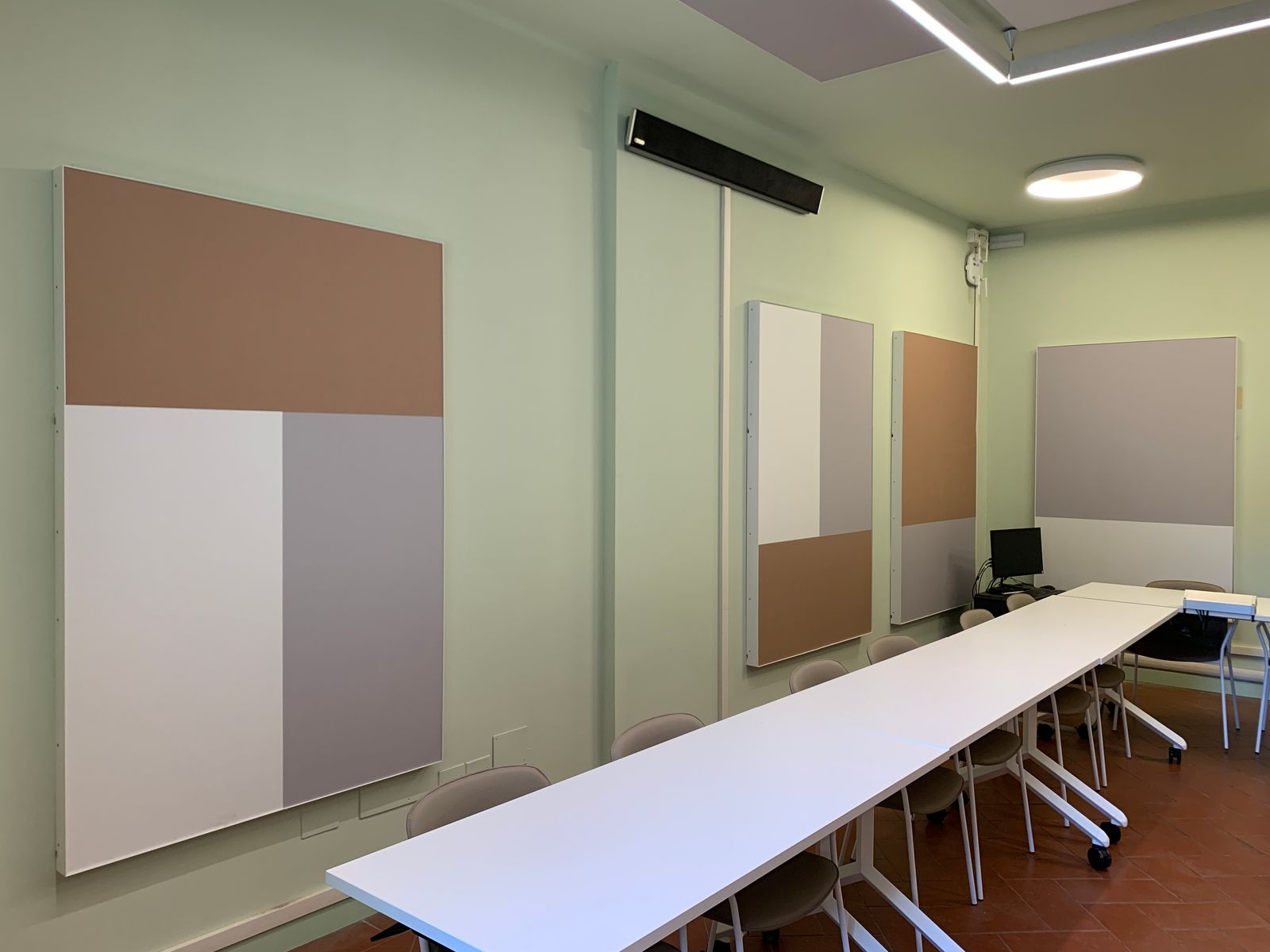
This is why acoustic absorption is often one of the first measures considered in open-plan offices, meeting rooms, restaurants and other occupied spaces.
The exact acoustic target depends on the room’s size, geometry, occupancy and intended use. There is no single reverberation-time value that is appropriate for every office or public space.
Sound insulation may still be necessary where there are specific requirements for privacy or noise transmission between space, for example, between meeting rooms, offices, hotel rooms or other noise-sensitive areas.
The important point is that absorption and insulation should not be treated as interchangeable solutions.
Where UniVicoustic fits
UniVicoustic develops acoustic treatment solutions designed to control sound inside a room.
The portfolio covers several aspects of acoustic treatment:
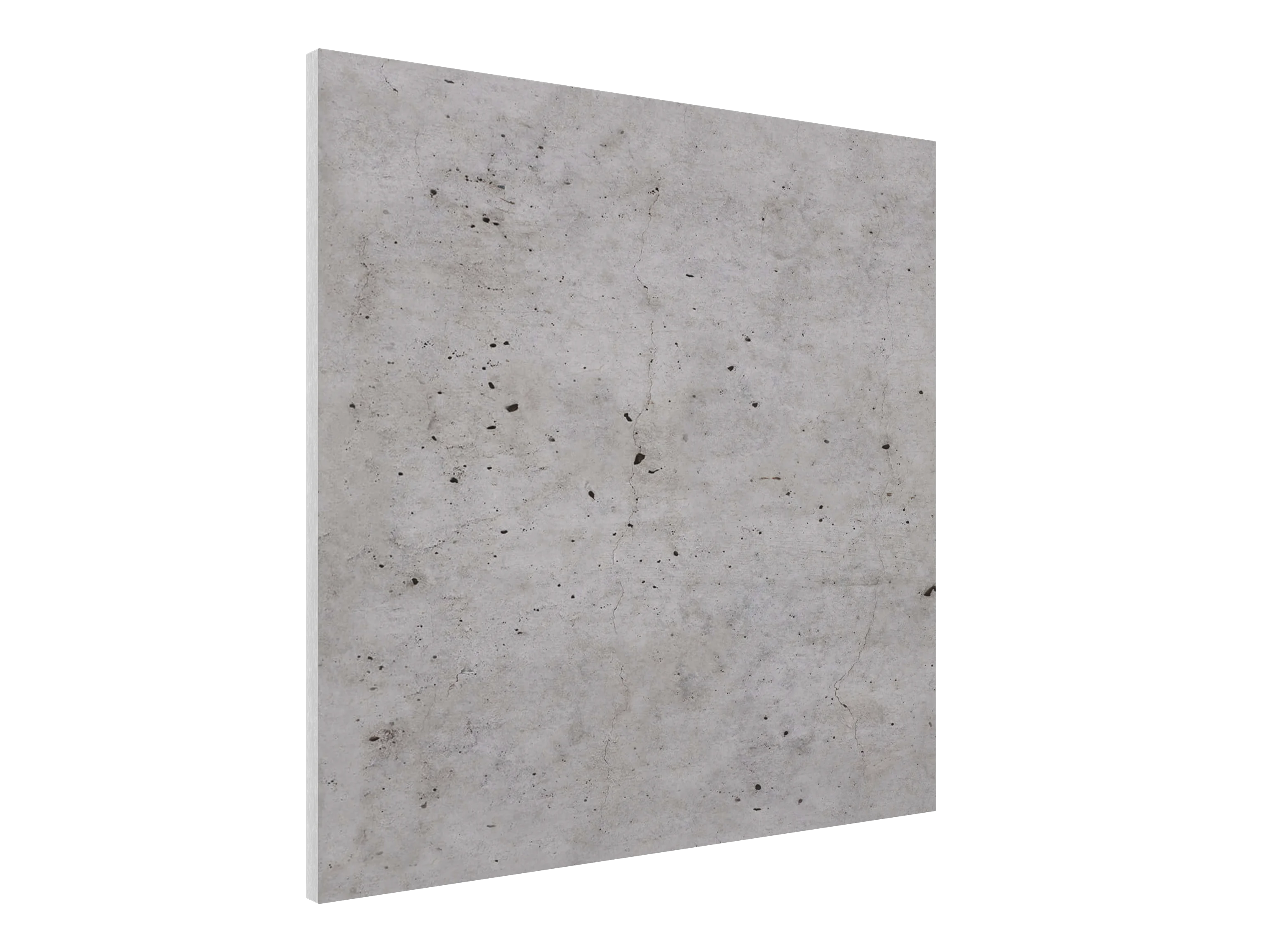
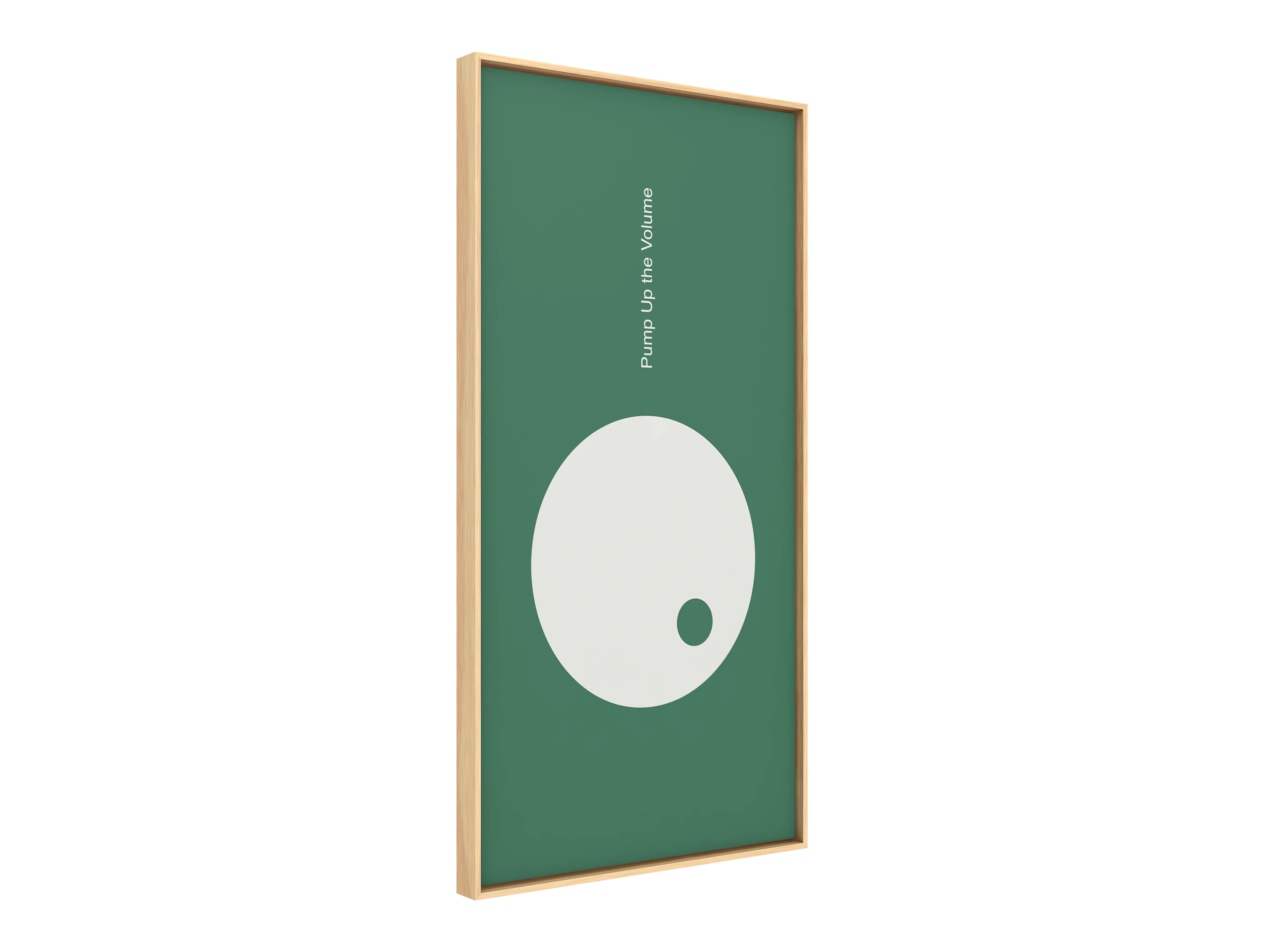
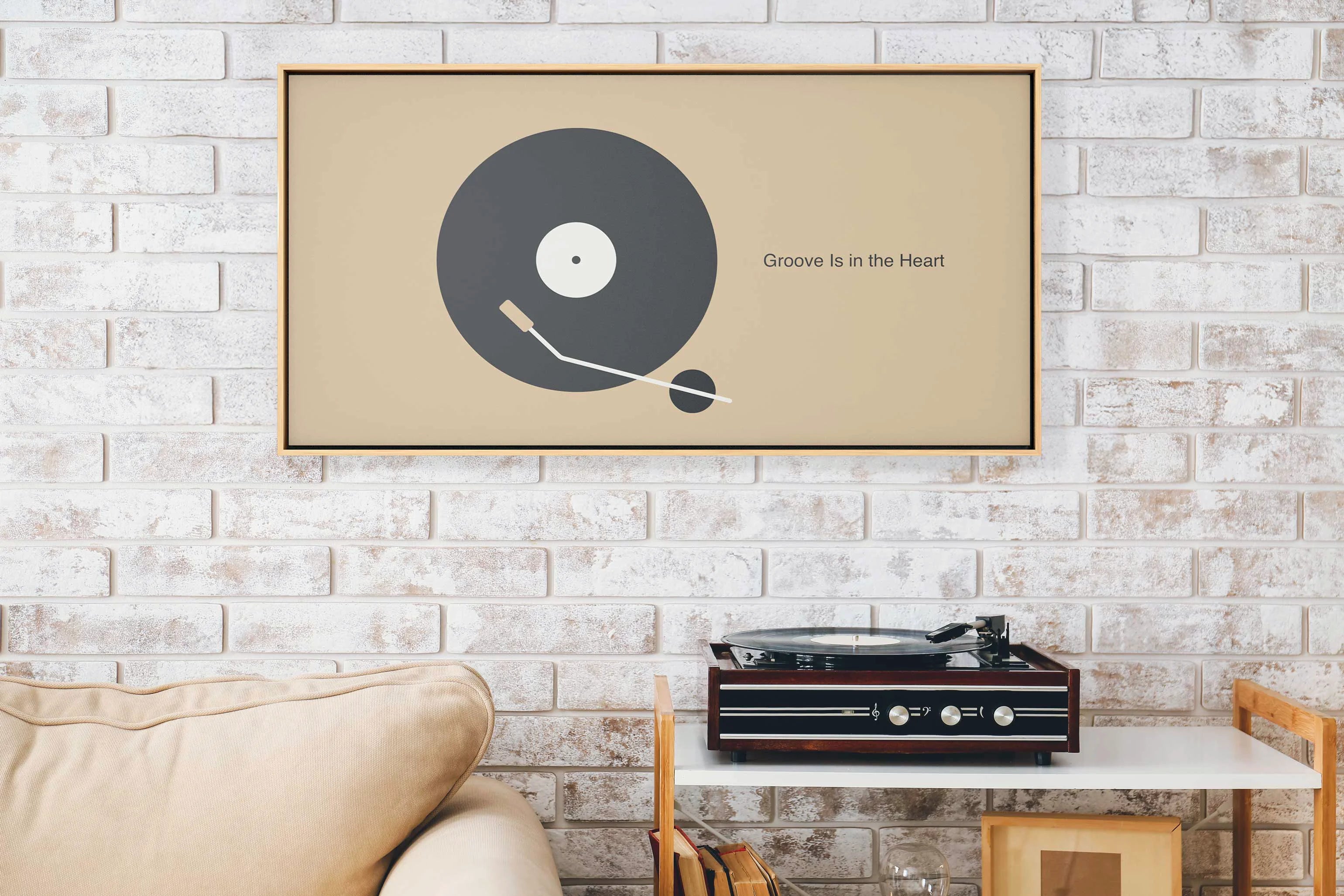
Absorption: wall panels such as Flat Panel VMT, Cinema VMT and Cinema Round Premium; ceiling solutions such as Flat Panel VMT and Flat Panel PET; suspended solutions such as ViCloud VMT and GEN_VMT PENRAY 01 Cloud; suspended baffles; and wall tiles such as the VicTiles 3D Collection.
Diffusion: products from the Multifuser range and hybrid solutions such as Flexi Wave Ultra, combining absorption and diffusion.
Low-frequency control: solutions such as Super Bass Extreme Ultra, Mega Bass Trap VMT and VicTotem Ultra VMT, designed to help manage low-frequency acoustic behavior and the effects of room resonances.
Many UniVicoustic products use VMT (Virtual Material Technology), combining acoustic functionality with a wide range of visual finishes. This allows acoustic treatment to be integrated into spaces where architectural appearance is an important consideration.
The products are predominantly manufactured using VicPET Wool, a material made largely from recycled PET bottles, with product-specific fire classifications.
All of these solutions fall under acoustic treatment.
When a project also requires sound insulation between spaces, that is a different engineering challenge. It may require structural sound insulation, acoustic doors and windows, construction details and assessment of possible flanking paths.
This is where the UniVicoustic Project Team can contribute to the overall acoustic strategy. Our acoustic engineers and designers can analyze the room, define appropriate acoustic treatment, determine product placement and develop solutions that balance acoustic performance with the architectural requirements of the space.

Whether the goal is a quieter office, a more intelligible meeting room, a controlled home cinema or a professional listening environment, the first step is understanding which acoustic problem you are actually trying to solve.
Frequently asked questions
Is sound absorption the same as soundproofing?
No. Absorption controls reflections and reverberation inside a room. Sound insulation reduces sound transmission between spaces. They address different acoustic problems.
Will acoustic panels stop my neighbors from hearing me?
Not on their own. Acoustic panels can reduce the sound energy reflected inside the room, but they do not provide the structural separation required to significantly reduce sound transmission to adjacent spaces.
So what actually blocks sound between two rooms?
Sound insulation is achieved through the construction separating the spaces, including walls, floors, ceilings and appropriate acoustic doors and windows, together with correct detailing and control of transmission paths.
What is reverberation time?
Reverberation time is the time required for sound to decay by 60 dB after the sound source has stopped. Excessive reverberation can reduce speech intelligibility and make a room sound noisy or echoey.
What do the sound absorption coefficient and NRC mean?
They are measures used to describe sound absorption performance. The sound absorption coefficient, α, expresses the proportion of incident sound energy absorbed by a surface under specified test conditions. NRC is a single-number rating derived from absorption coefficients at selected frequencies and is used to provide a simplified indication of absorption performance.
Do I need absorption or insulation for my office?
It depends on the problem. If the main issue is reverberation, excessive noise or poor speech intelligibility, acoustic absorption is likely to be part of the solution. If the issue is sound travelling between rooms, sound insulation needs to be considered separately.
Is sound insulation the same as thermal insulation?
No. They address different physical properties. Thermal insulation is intended to reduce heat transfer, while sound insulation is concerned with reducing sound transmission between spaces.








Share:
How to Reduce Echo and Reverberation in a Room: Acoustic Tips and Solutions