

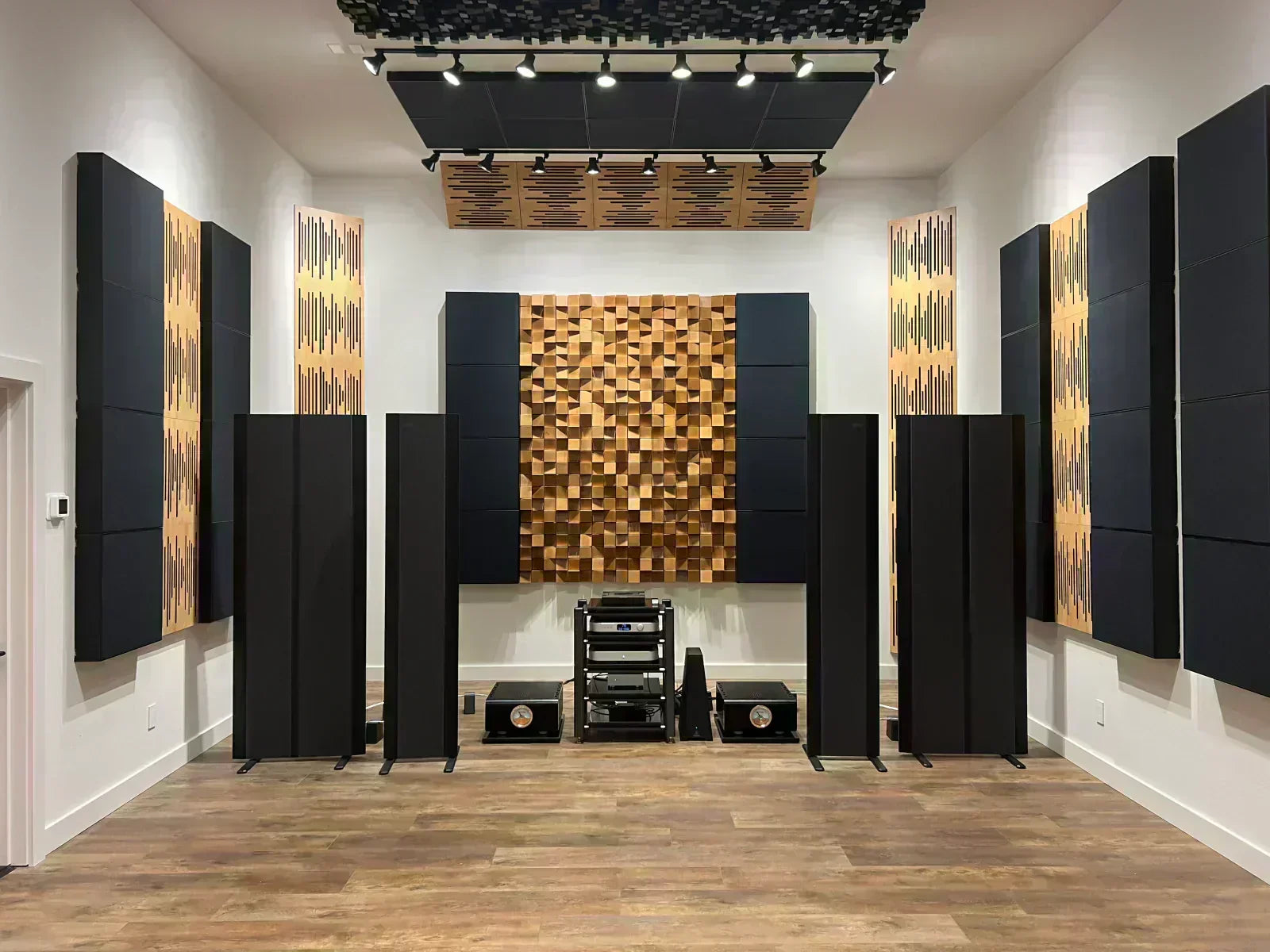
In High End audio, the listening room is one of the most important components in the signal chain. Unlike an amplifier, DAC (digital-to-analog converter) or loudspeaker, the room does not simply add a small tonal character. It shapes the way sound energy builds up, decays and reaches the listening position.
Room acoustics influence bass response, stereo imaging, transient clarity and tonal balance. Resonant modes can reinforce or attenuate low frequencies, creating uneven bass response across the listening area. Early reflections can reduce image precision and affect perceived detail. Hard parallel surfaces can create flutter echoes and excessive brightness. Electronic correction can help address certain frequency response issues, but it cannot replace physical acoustic treatment, particularly when dealing with modal decay, early reflections and spatial behavior.
A High End listening room therefore requires a methodical, frequency aware approach. The goal is not to make the room dead, is to control the room so that the loudspeakers, the system and the recording can perform as intended.
Based on UniVicoustic’s acoustic treatment methodology, treatment for high-end listening rooms can be organized around three main priorities: Reverberation Time Optimization, First Reflections Control, and Sound Field Anomalies.
Why Order Matters: A Strategy, Not a Fixed Formula
Acoustic problems are interconnected, but they are not all equally important. The decay behaviour of the room influences clarity and tonal balance. First reflections affect stereo imaging, focus and spaciousness. Flutter echoes, room modes and other localised anomalies can compromise timbre, bass consistency and listening comfort.
For this reason, acoustic treatment should follow a clear strategy rather than a rigid formula. In practice, reverberation time, early reflections, room modes, loudspeaker placement and listening position should be assessed together. The final treatment concept then combines absorption, diffusion and bass control according to the specific room geometry, system setup and listening preferences.
This approach avoids two common mistakes: over treating the room at high frequencies, or focusing only on visible wall panels while leaving low frequency and modal behaviour unresolved.
Step 1: Reverberation Time Optimization
The target: a neutral and controlled decay
The first step is to control the overall decay of the room. Reverberation Time, or RT, is one of the main acoustic aspects perceived by the listener. In a high end listening room, the room should be neither excessively live nor overly dead.
A typical target range for high-end listening rooms is approximately 0.3 to 0.6 seconds across the mid-frequency bands, commonly between 250 Hz and 4 kHz. The ideal value depends on room volume, loudspeaker type, listening distance, finishes and listening preference. In smaller rooms, nearfield listening environments or more controlled critical listening spaces, slightly lower values may also be appropriate, provided that the room does not become overly dry or spectrally unbalanced.
A room with excessive decay can sound reverberant, congested and unclear. A room with too much absorption can sound dry, unnatural and fatiguing. The objective is a balanced and continuous decay that allows the music to remain clear without removing the natural sense of space.
See and hear how acoustic treatment controls reverberation time in a listening room.
Although RT optimization must consider the full frequency spectrum, low frequency decay also needs attention because excessive modal energy can strongly affect the perceived balance of the room. However, specific modal peaks and nulls are better addressed under Step 3: Sound Field Anomalies. In this methodology, Step 1 defines the overall decay target; Step 3 deals more directly with room modes as specific low frequency anomalies.
UniVicoustic solutions for Reverberation Time Optimization
RT optimization is normally achieved through a balanced combination of absorption and diffusion distributed across walls and ceiling. The treatment should reduce excessive decay while preserving enough acoustic energy to keep the room natural and engaging.
For broadband absorption, Cinema Round Premium and the Cinema Line VMT range can be used where stronger control is required. Cinema Piano VMT, Cinema Forte VMT and Cinema Fortissimo VMT provide scalable broadband absorption with different depths and acoustic performance levels. These products are particularly relevant when the room requires significant decay reduction without compromising visual integration.
VicPattern Ultra Wavewood MKII, Wavewood Ultra Lite and Flexi Wave Ultra can contribute to a more balanced acoustic result, combining absorption with surface design that helps avoid an overly dead character.
Multifuser DC4 and Multifuser Wood MKII may be used where diffusion is required to preserve spatial energy and avoid excessive high frequency absorption.
Bass control products can also contribute to the overall decay behaviour, especially in rooms where low frequency energy persists for too long. However, their role in controlling room modes is developed further in Step 3.
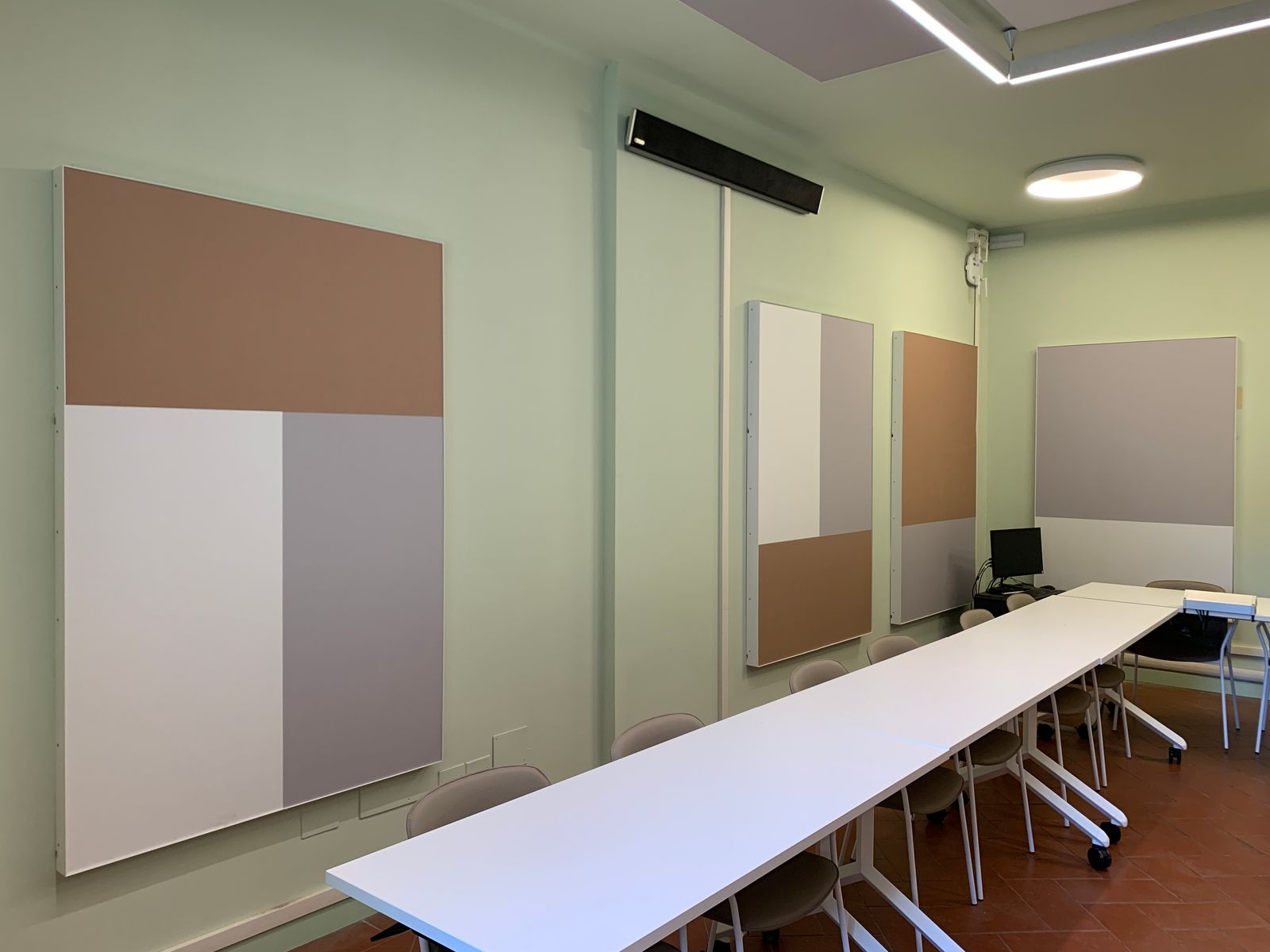
 Example of a balanced RT optimization layout using absorption and diffusion across walls and ceiling.
Step 2: First Reflections Control
The target: clarity, focus and stereo imaging
Once the overall decay target is defined, the next priority is the control of first reflections. These reflections usually occur on the side walls, ceiling and, depending on the geometry, the front wall or nearby furniture and architectural elements.
First reflections arrive shortly after the direct sound. When they are strong and coherent, they can interfere with the direct signal and affect tonal balance, stereo focus and perceived detail. The result can be a less stable phantom center, reduced image depth and a less precise soundstage.
The ceiling reflection point is particularly important and is often underestimated. In many listening rooms, a ceiling cloud or equivalent treatment can significantly improve clarity and imaging.
The choice between absorption, diffusion or hybrid treatment depends on the room and on listening preference. Some listeners prefer stronger definition and minimum room influence. Others prefer to preserve some lateral energy to increase spaciousness and envelopment. The preferred solution can also change with the type of music being reproduced.
For this reason, first reflection treatment should not be presented as a universal rule. In smaller rooms or close listening positions, controlled absorption or hybrid treatment is often more appropriate. In larger rooms, or where sufficient distance exists, diffusion at selected reflection points can help preserve energy while reducing strong specular reflections.
UniVicoustic solutions for First Reflections Control
Where controlled absorption is required at first reflection points, Flat Panel VMT with VicSpacer Plus MKII can provide broadband mid frequency absorption with improved performance, Cinema Round Premium and Cinema VMT solutions can also be used when stronger absorption is required.
Where diffusion is suitable, Multifuser DC4 and Multifuser Wood MKII can reduce strong specular reflections while preserving acoustic energy in the room. These solutions are particularly useful when the design objective is to maintain spaciousness rather than remove too much energy from the lateral sound field.
Hybrid solutions such as VicPattern Ultra Wavewood MKII and Flexi Wave Ultra can be used when the project requires a compromise between clarity, absorption and a more natural room response.
A scalable first reflection strategy can therefore combine absorption, diffusion and hybrid panels according to room size, listening distance, loudspeaker directivity and the desired balance between definition and spaciousness.
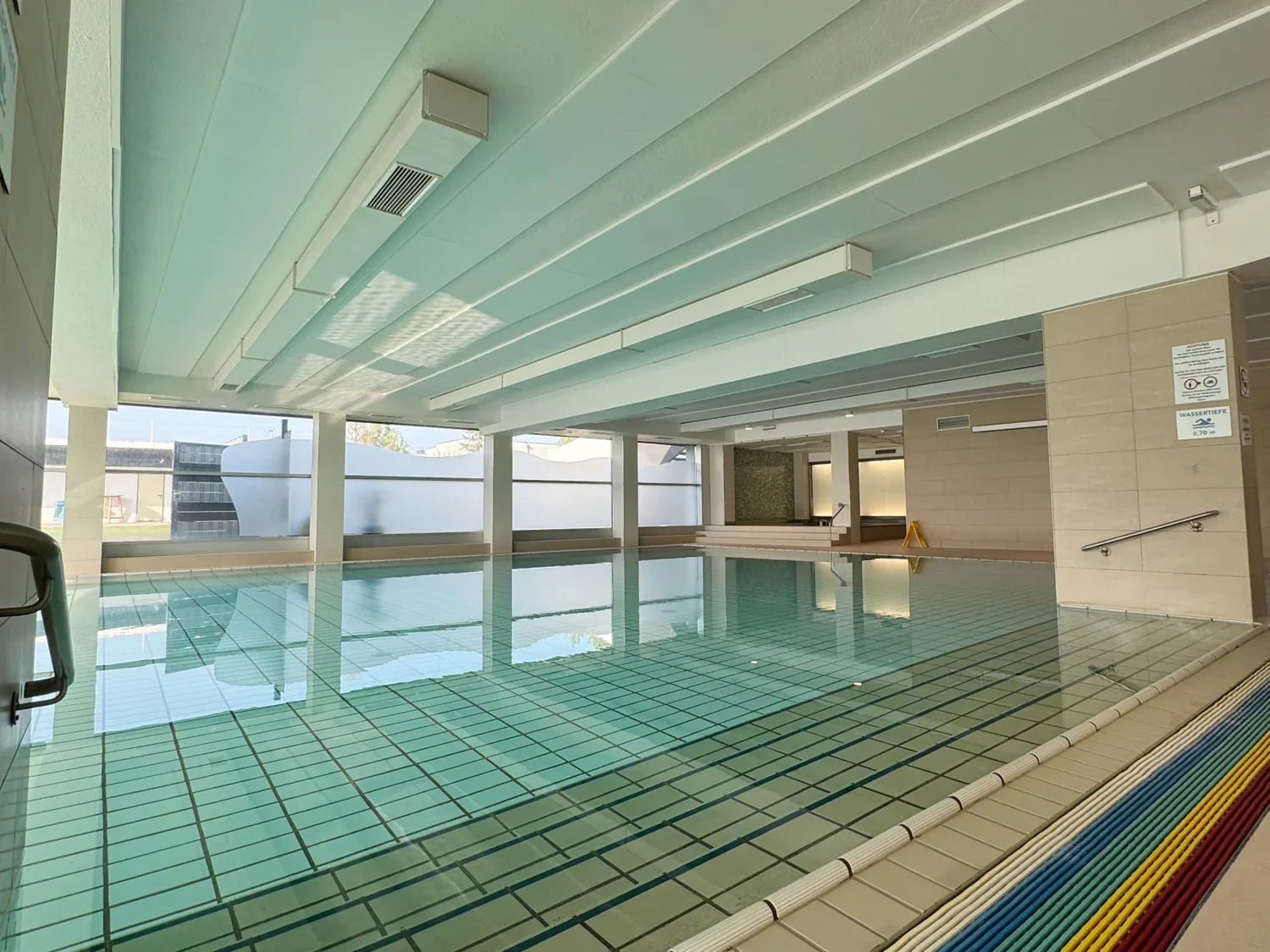
 First reflection control on side walls and ceiling, with absorption or diffusion selected according to the room.
Step 3: Sound Field Anomaly Correction
The target: correcting specific problems without over damping the room
After reverberation time and first reflections are addressed, the next step is to identify and correct specific sound field anomalies. In high end listening rooms, the most common issues are flutter echoes, room modes, late reflections and boundary related interference.
Flutter echo occurs between parallel reflective surfaces and is often heard as a rapid metallic repetition when clapping in the room. It can make transients sound harsh and reduce the perceived quality of the listening environment.

Late reflections can be perceived as discrete echoes or as a loss of detail and definition, especially in complex musical passages. These reflections often come from rear walls, ceilings, glass surfaces, hard furniture or untreated architectural elements.

Room modes occur at specific low frequencies determined by the dimensions and shape of the room. They can create position dependent pressure maxima and minima, causing excessive reinforcement or attenuation of certain bass notes. This is why bass may sound strong in one seat and weak in another.
Speaker Boundary Interference Response, or SBIR, is caused by the interaction between the direct sound from the loudspeaker and reflections from nearby boundaries, especially the front wall, floor and side walls. It often creates cancellations in the bass and low-mid frequency range.
At this stage, the main risk is over treatment. Too much high-frequency absorption can remove the natural sense of space in the room and make the listening experience dry, narrow and lifeless. The goal is targeted correction, not excessive damping.
UniVicoustic solutions for Sound Field Anomaly Correction
For room modes and low frequency anomalies, bass trap solutions should be placed in pressure zones, especially corners and wall ceiling junctions where relevant. Super Bass Extreme Ultra and Super Bass Extreme Ultra VMT are designed for corner mounting and provide effective low frequency absorption in the modal region. In larger or more demanding rooms, Mega Bass Trap VMT, Mega Bass Trap VMT XXL and VicTotem Ultra VMT can complement the treatment strategy.
For SBIR (Speaker Boundary Interference Response) reduction, the first step is always careful loudspeaker placement. Where possible, broadband absorption on the front wall behind or around the loudspeakers can help reduce boundary related interference. Cinema Round Premium and the Cinema Line VMT range can be considered where strong broadband absorption is required.
For flutter echoes and late reflections, treatment should be distributed according to the room geometry and acoustic objectives, in order to avoid large untreated parallel reflective surfaces. Depending on the acoustic objective, Cinema VMT and Cinema Round Premium can be used where broadband absorption is required, while Multifuser DC4 and Multifuser Wood MKII can be used where diffusion is more appropriate. VicPattern Ultra Wavewood MKII can provide a hybrid approach, helping to control reflections while preserving a more natural sense of room ambience.
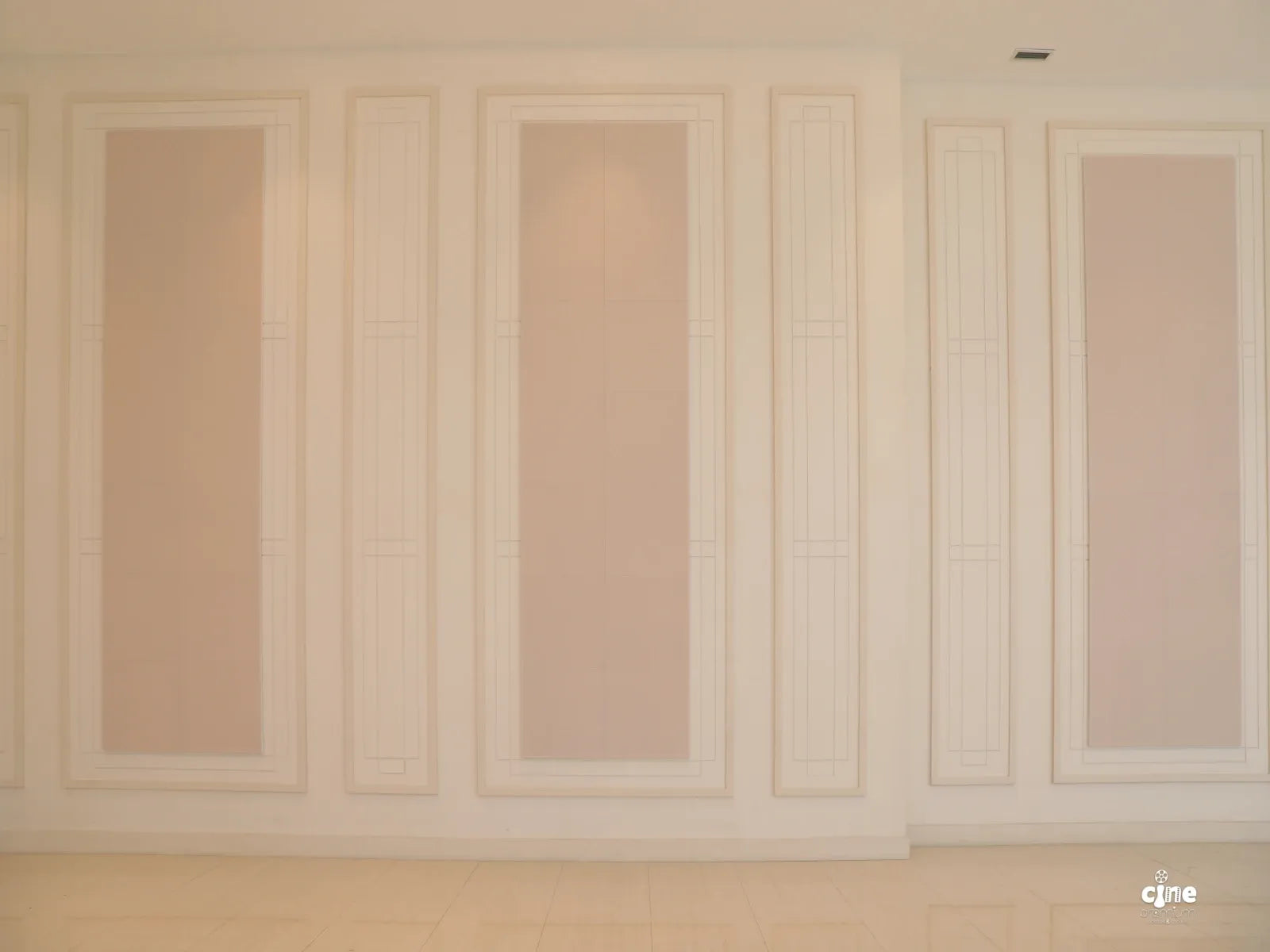
 Sound field anomaly correction: bass traps for room modes, broadband absorption for SBIR risk, and distributed treatment for flutter echoes.
The Result: A Neutral, Controlled Listening Room
When these three priorities are addressed together, the room becomes less intrusive in the listening experience. Bass becomes more controlled and consistent. The stereo image becomes more stable. Transients become cleaner. Detail becomes easier to perceive without increasing playback level.
A well treated high end listening room does not sound dead. It sounds controlled, balanced and natural. The room stops competing with the loudspeakers and becomes a more neutral acoustic environment for music reproduction.
Acoustic treatment is not merely an upgrade. In a high end listening room, it is the prerequisite for the rest of the system to perform as intended.
High-End Listening Rooms White Paper
If you wish to learn more about Acoustic Principles see ourAcoustic Treatment article check our White Papers for download.













Share:
UniVicoustic at High End Vienna 2026: New Acoustic Solutions for Critical Listening
What Is Flutter Echo? A Complete Guide to Causes and Fixes