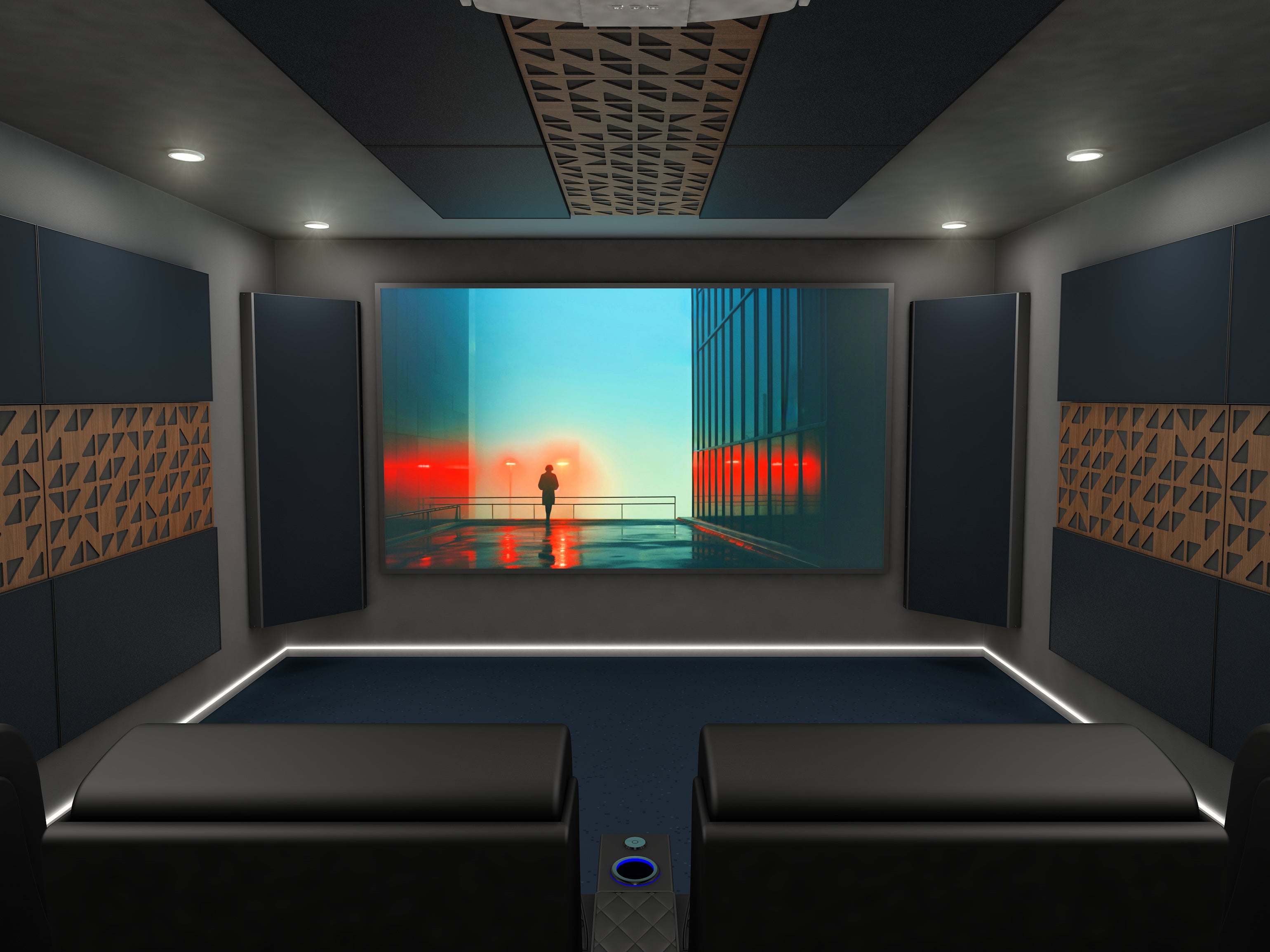
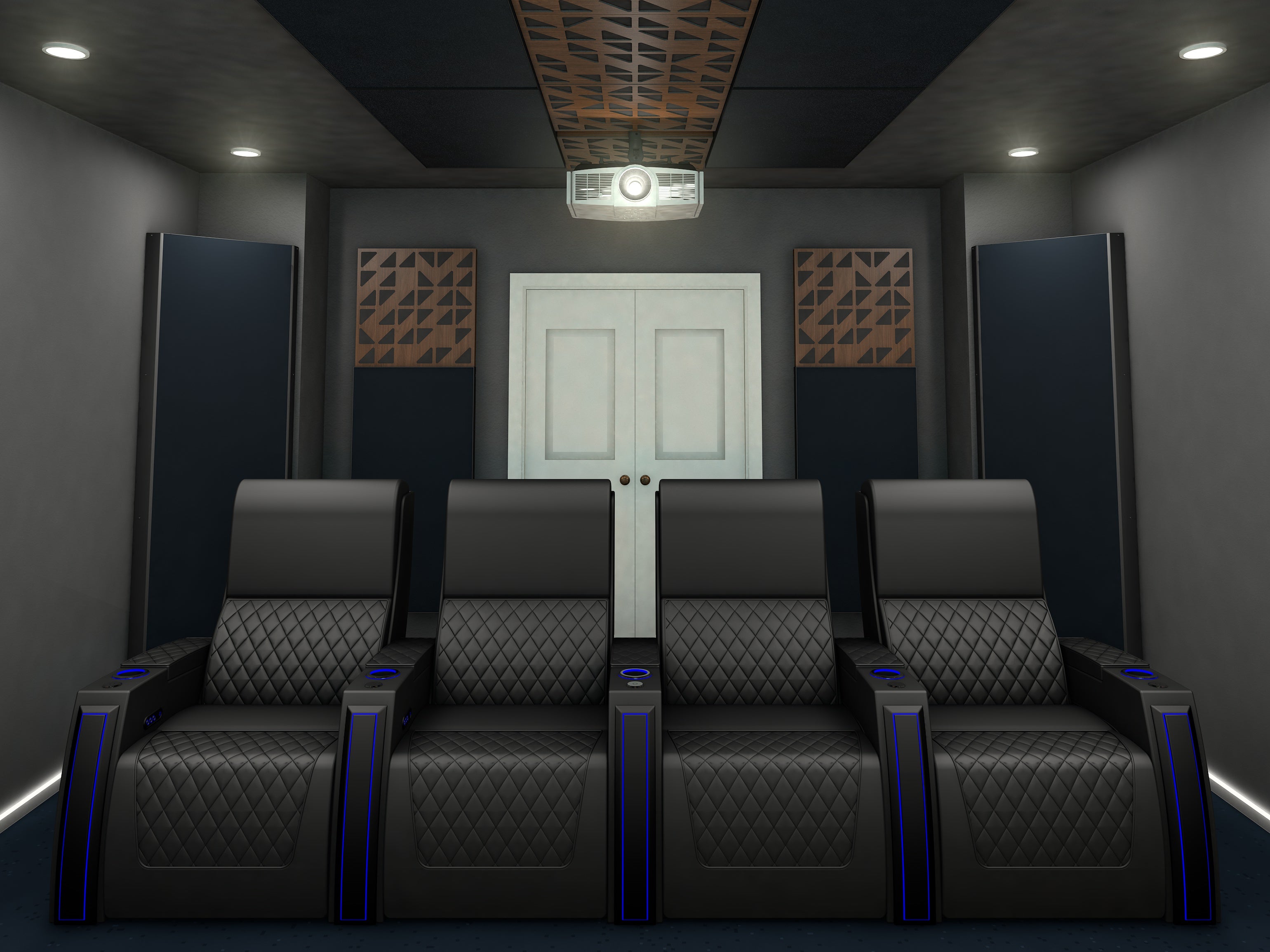
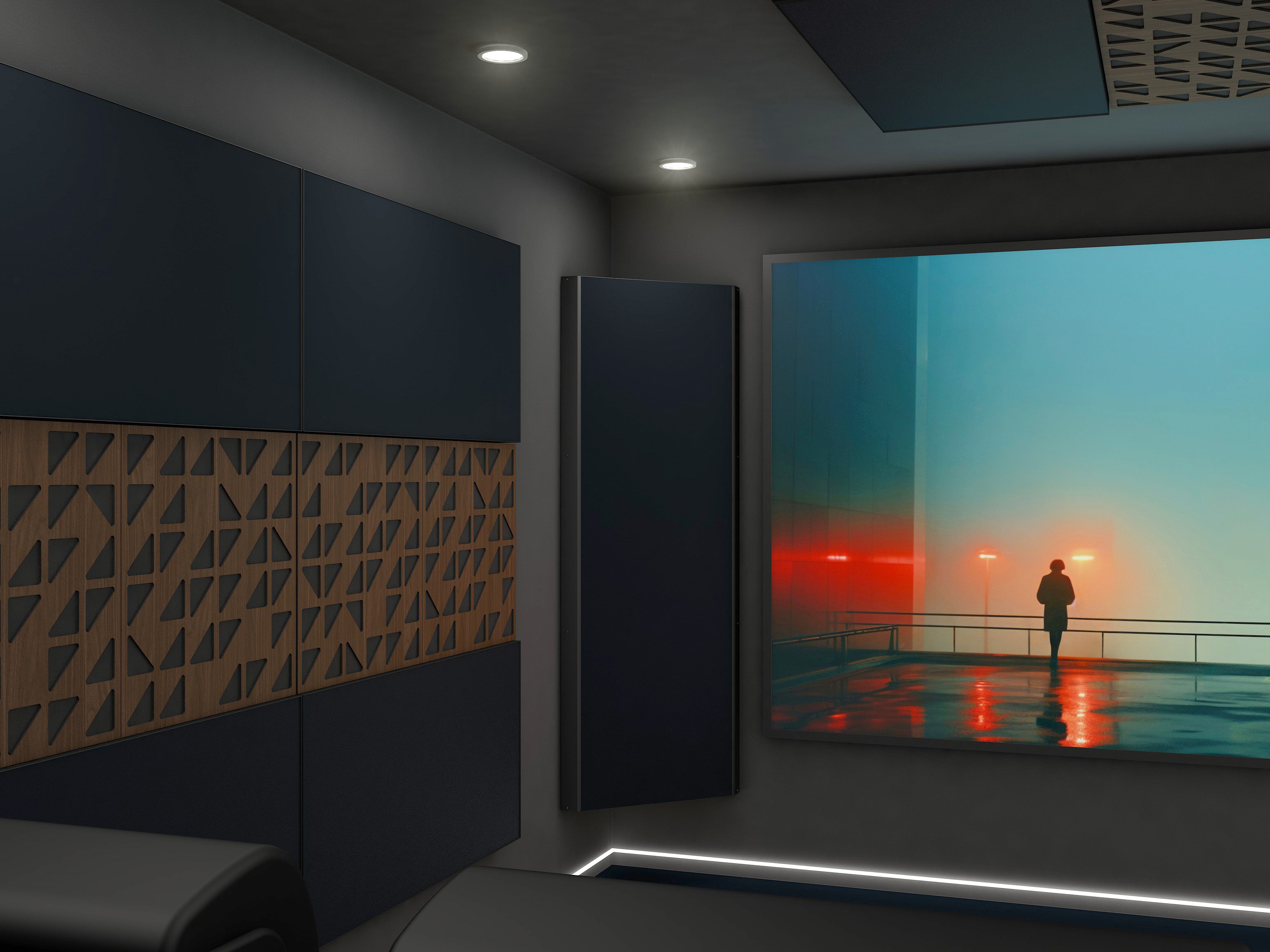
Room acoustic treatment refers to the process of improving the acoustic conditions of a room for a specific purpose, such as listening to music, recording audio, or speech intelligibility. The main goal is to create a balanced and natural sound in a room by controlling the way sound waves interact with the surfaces of the space, like walls, ceiling and the floor.
In order to control and manage sound reflections, reverberation time, and other acoustic issues within the space, room acoustic treatment consists in adding sound-absorbing or diffusing materials, such as acoustic panels, to control unwanted sound reflections and echoes inside the room.
The specific type of treatment needed depends on the size and shape of the room, the intended use of the space, and the materials used in the construction of the walls, ceiling, and floor.
Step-by-step guidelines for room acoustic treatment
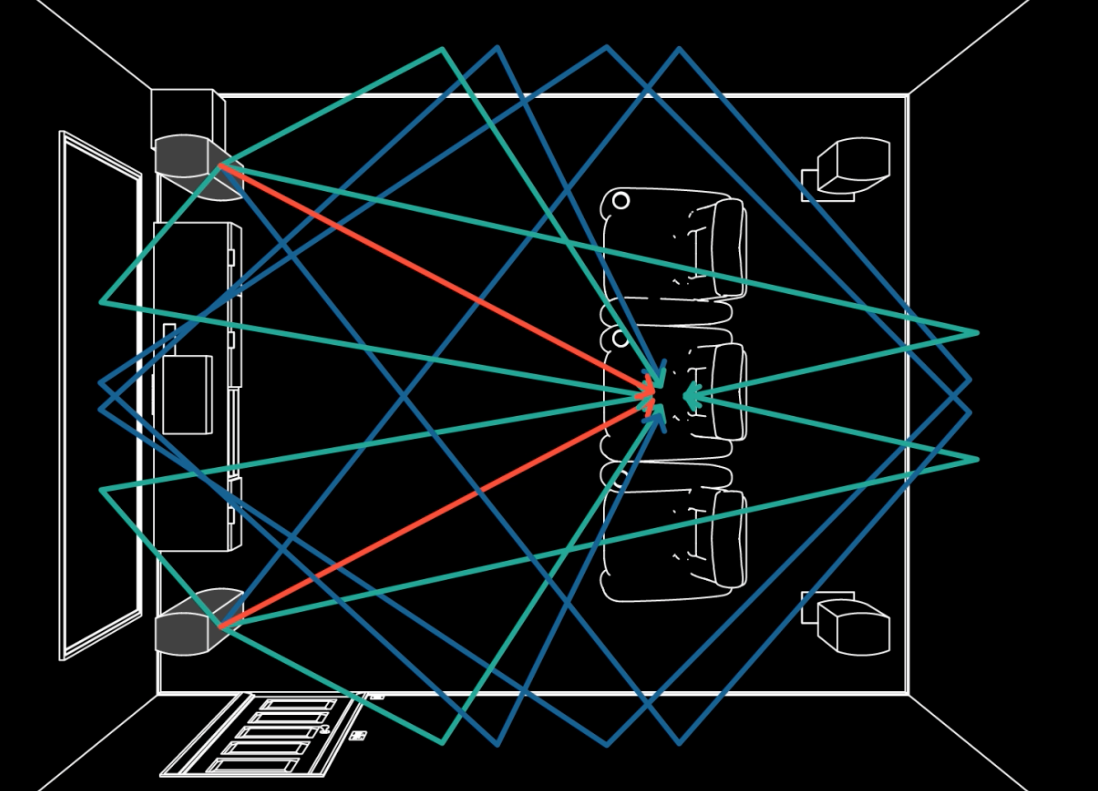
Implementing acoustic solutions to a room involves a comprehensive approach to understanding, planning, and implementing sound improvements. Here's a detailed step-by-step guide to help you effectively treat a room for optimal acoustics:
Define Purpose and Goals
You must determine the primary purpose of the room (e.g., home theater, recording studio, conference room), identify specific sound issues you want to address (e.g., reverberation, reflections, bass problems), and set clear goals for the desired acoustic improvements.
Room Analysis and Measurements
You must measure the room's dimensions, including height, length, and width. Acoustic measurements will help identify frequency response, reverberation time, and problem areas.
Frequency Analysis
Identify room modes, resonances and the primary and secondary resonant frequencies based on room dimensions.
Acoustic Panels Selection
Choose appropriate treatment materials based on identified issues (absorption, diffusion, bass trapping). Research and select high-quality acoustic products, considering absorption coefficients and diffuser designs. Calculate the required amount of treatment based on room volume and frequency analysis.
Strategic Treatment Placement
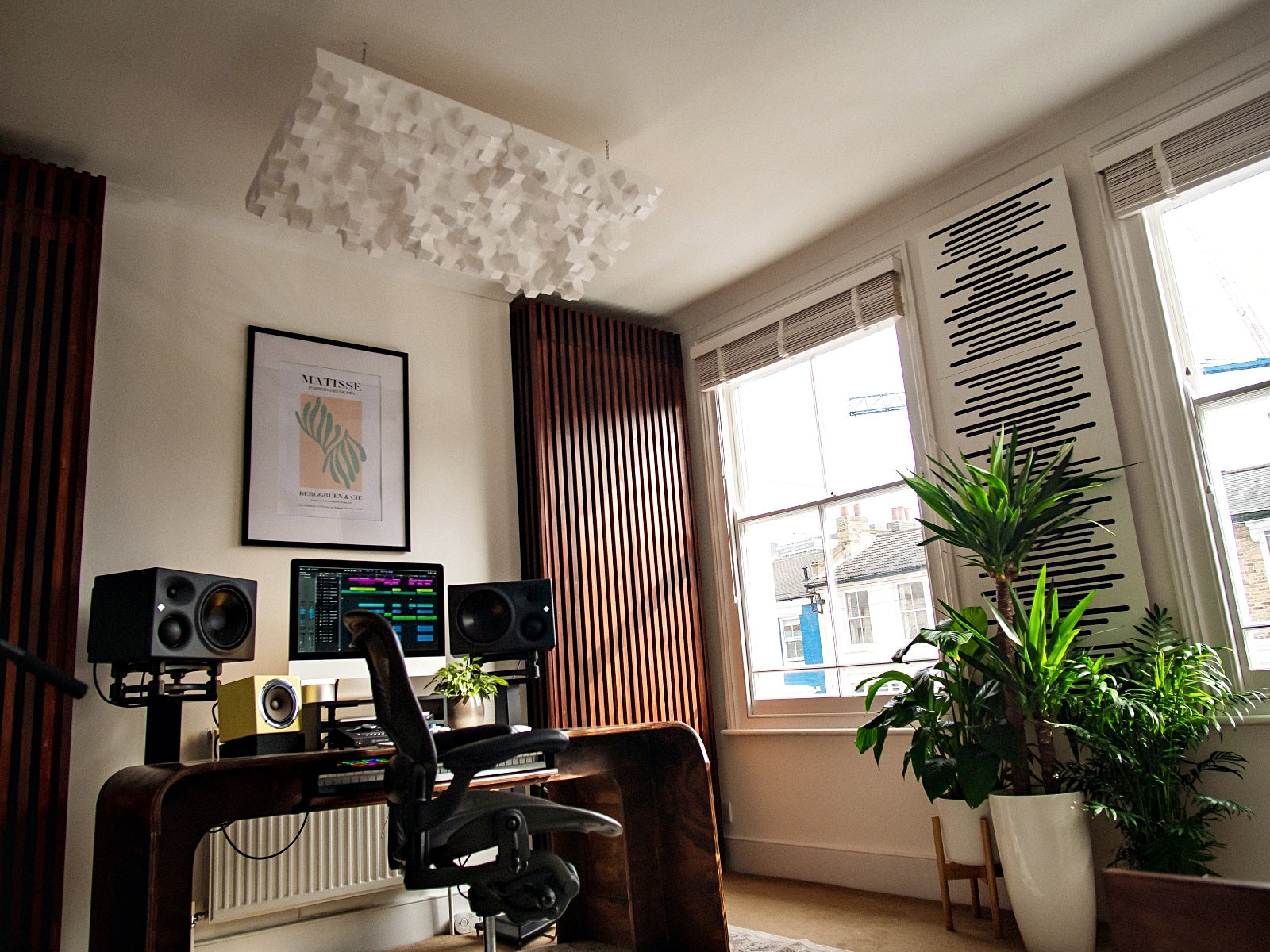
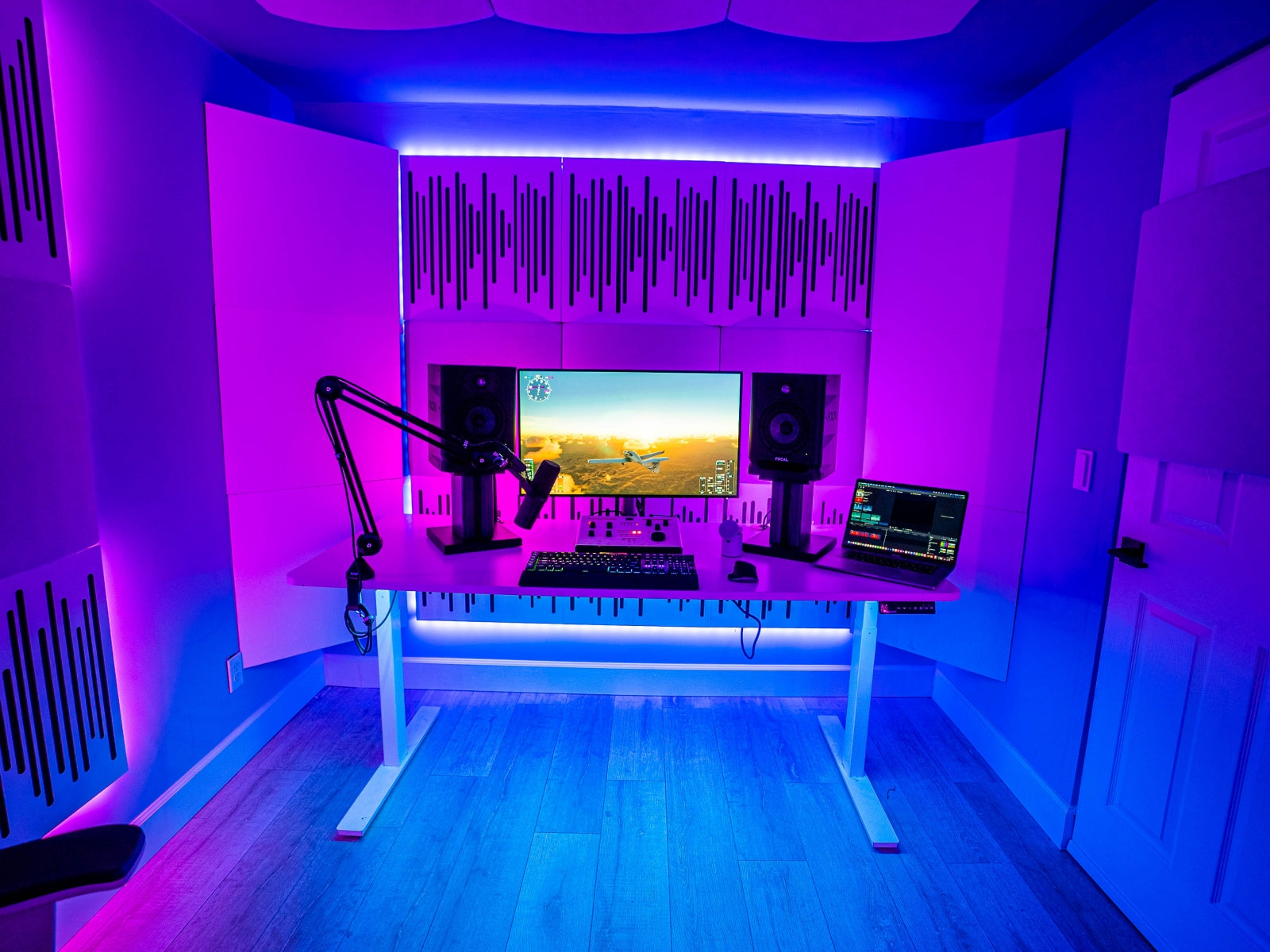
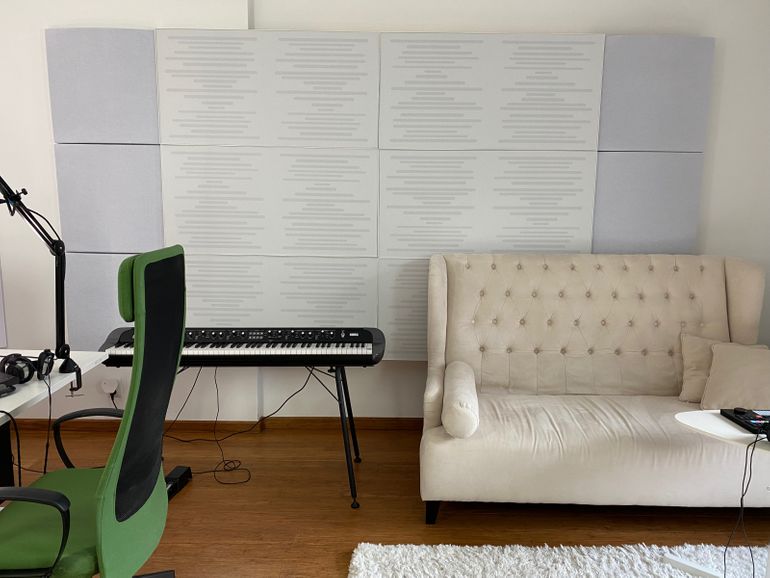
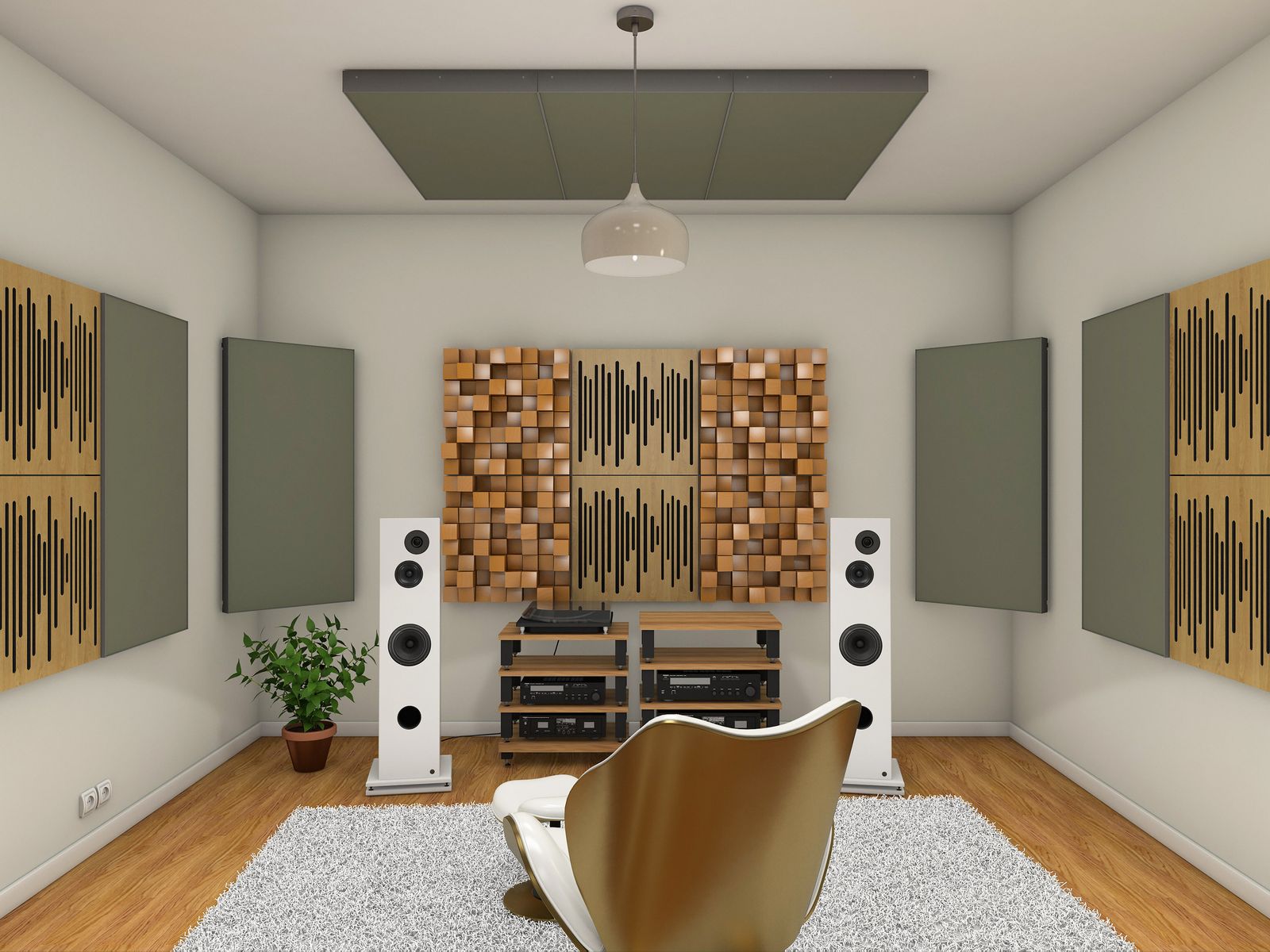
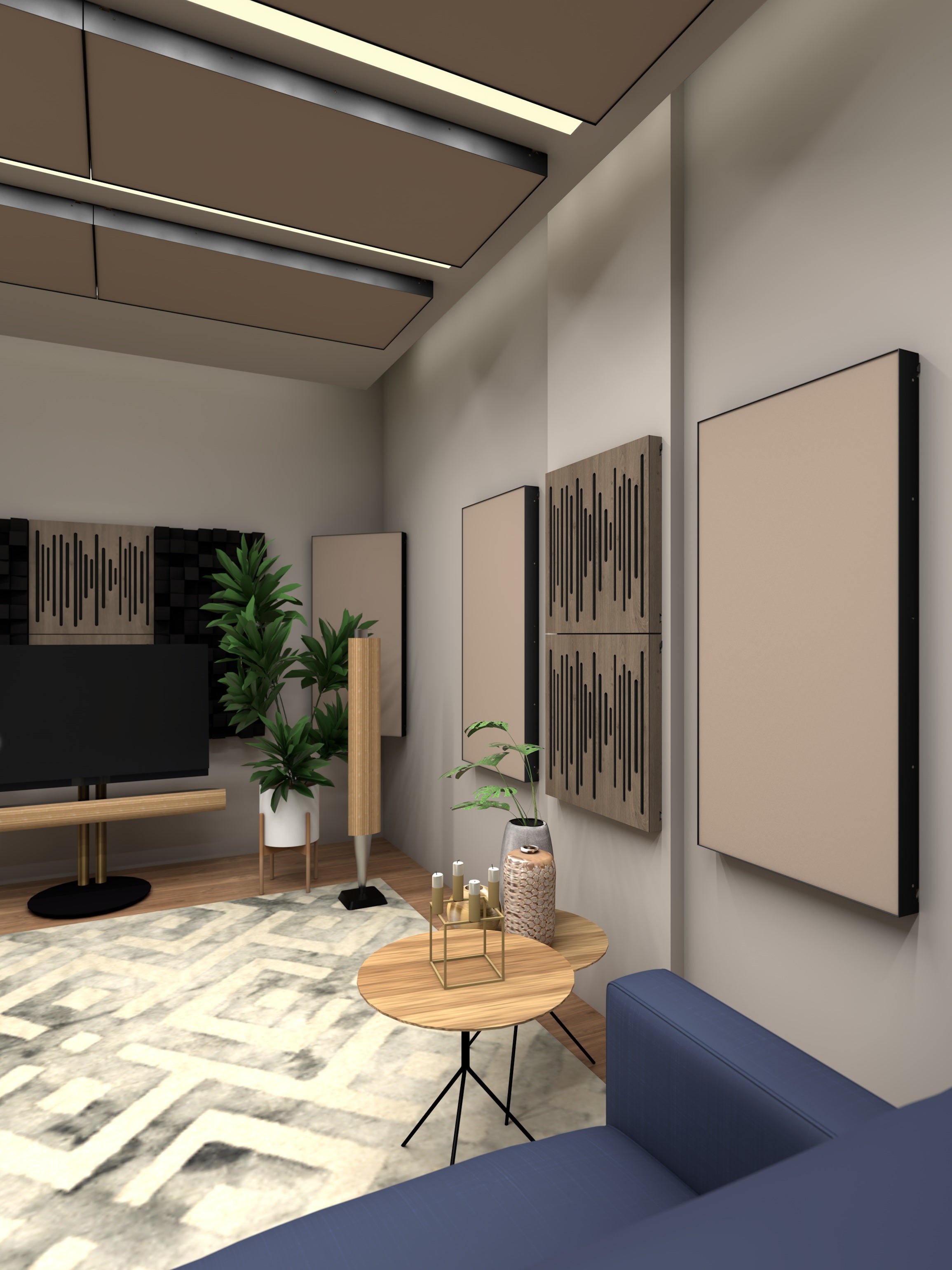
Place absorption panels at reflection points to minimize early reflections, position bass traps in corners to address low-frequency issues, and integrate diffusers to scatter sound waves and create a balanced sound field.
Speaker and Listener Placement
Place the speakers following the equilateral triangle arrangement and position the listener's seating area for optimal soundstage and imaging.
Installation and Implementation
Carefully install acoustic panels, bass traps, and diffusers according to manufacturer guidelines. Ensure secure attachment to walls, ceilings, and corners to prevent damage. Double-check measurements and placements before finalizing installation.
Testing and Fine-Tuning
Measure the room's acoustic performance after treatment installation. Listen critically to various audio sources to assess the perceived improvements.
Iteration and Adjustment
Make necessary adjustments based on measurement results and listening evaluations. Fine-tune the placement of acoustic elements to address any remaining issues.
Professional Acoustic Consulting
If critical listening or complex acoustic challenges persist, consider consulting an acoustician or audio engineer. Professional expertise can help optimize the room and resolve intricate issues.
A professional acoustic consultant or engineer can help determine the best room acoustic treatment plan for a particular space based on these factors. To get a professional project with a case study for a specific room, you can request a project from a team of acousticians and designers.
Where is room acoustic treatment needed?
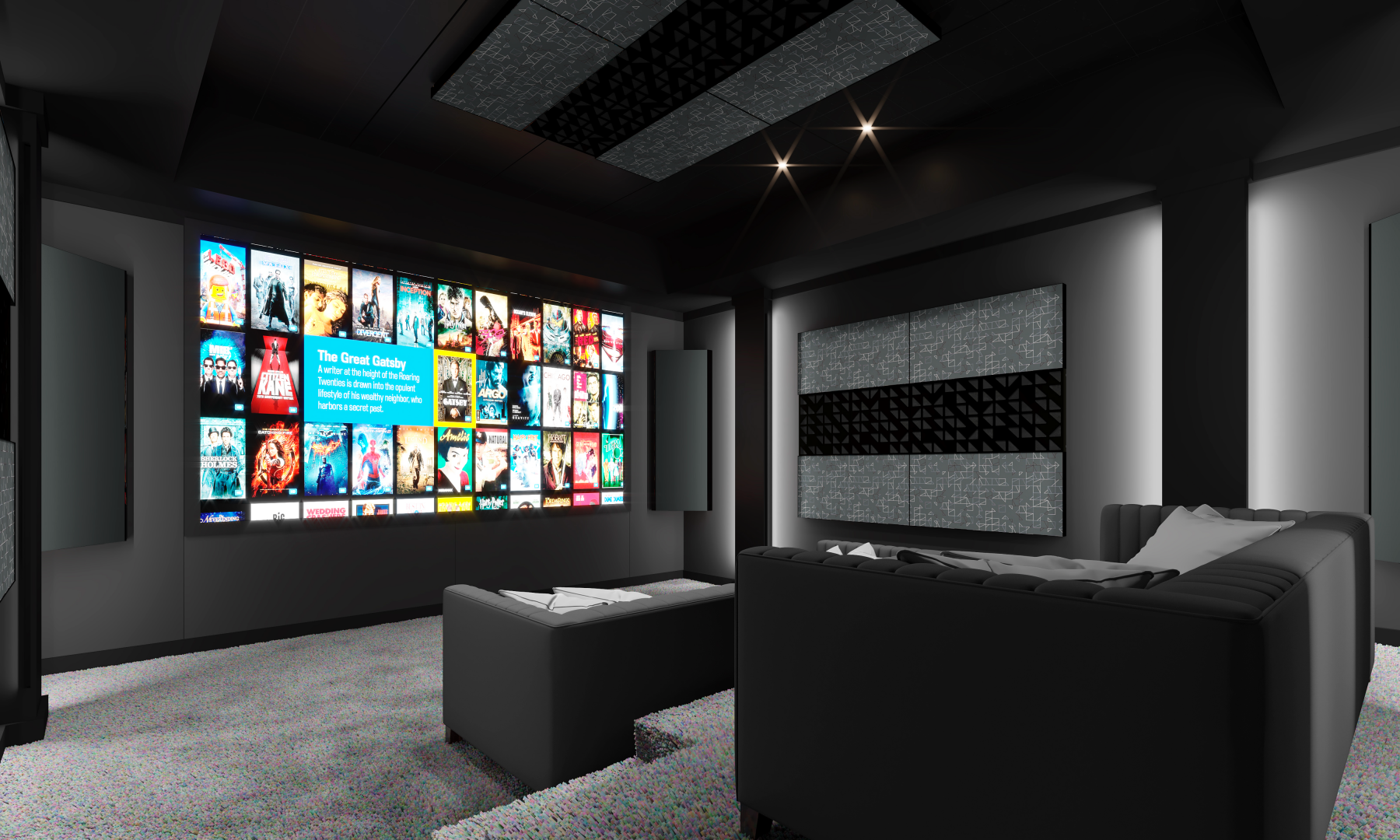
Room acoustic treatment can benefit a variety of rooms where sound quality, clarity, and overall acoustic performance are important. Here is a selection of those rooms:
- Home theaters require proper acoustics to enhance the cinematic experience. This includes controlling reflections, optimizing speaker placement, and managing bass frequencies to create an immersive experience.
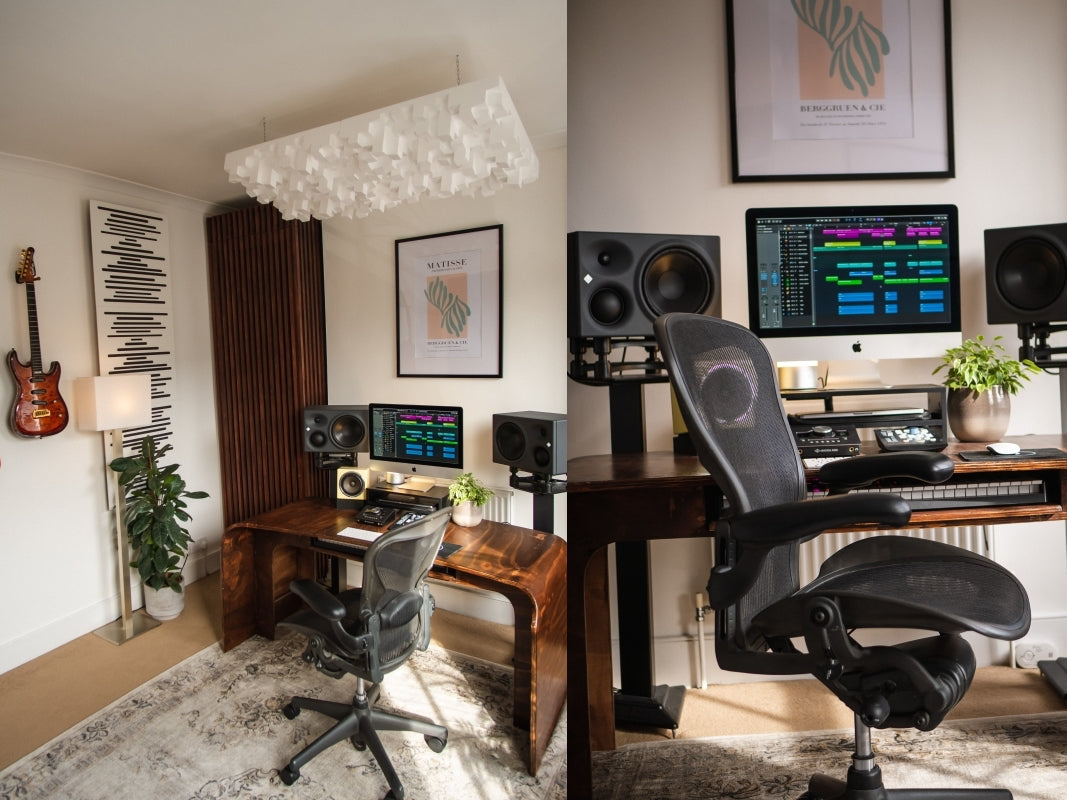
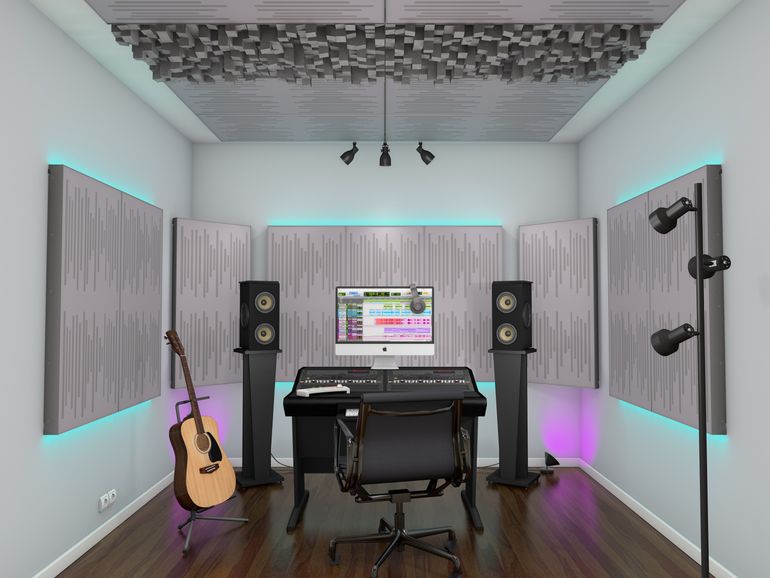
- Recording studios need accurate sound reproduction for recording, mixing, and mastering music and other audio content, ensuring that the room's acoustics don't affect the sound being recorded or mixed.
- Control rooms used for audio mixing and mastering require precise sound monitoring in a neutral and controlled listening environment.
- Dedicated listening rooms, where music enthusiasts enjoy high-quality audio playback need minimized reflections to create an ideal sound stage.
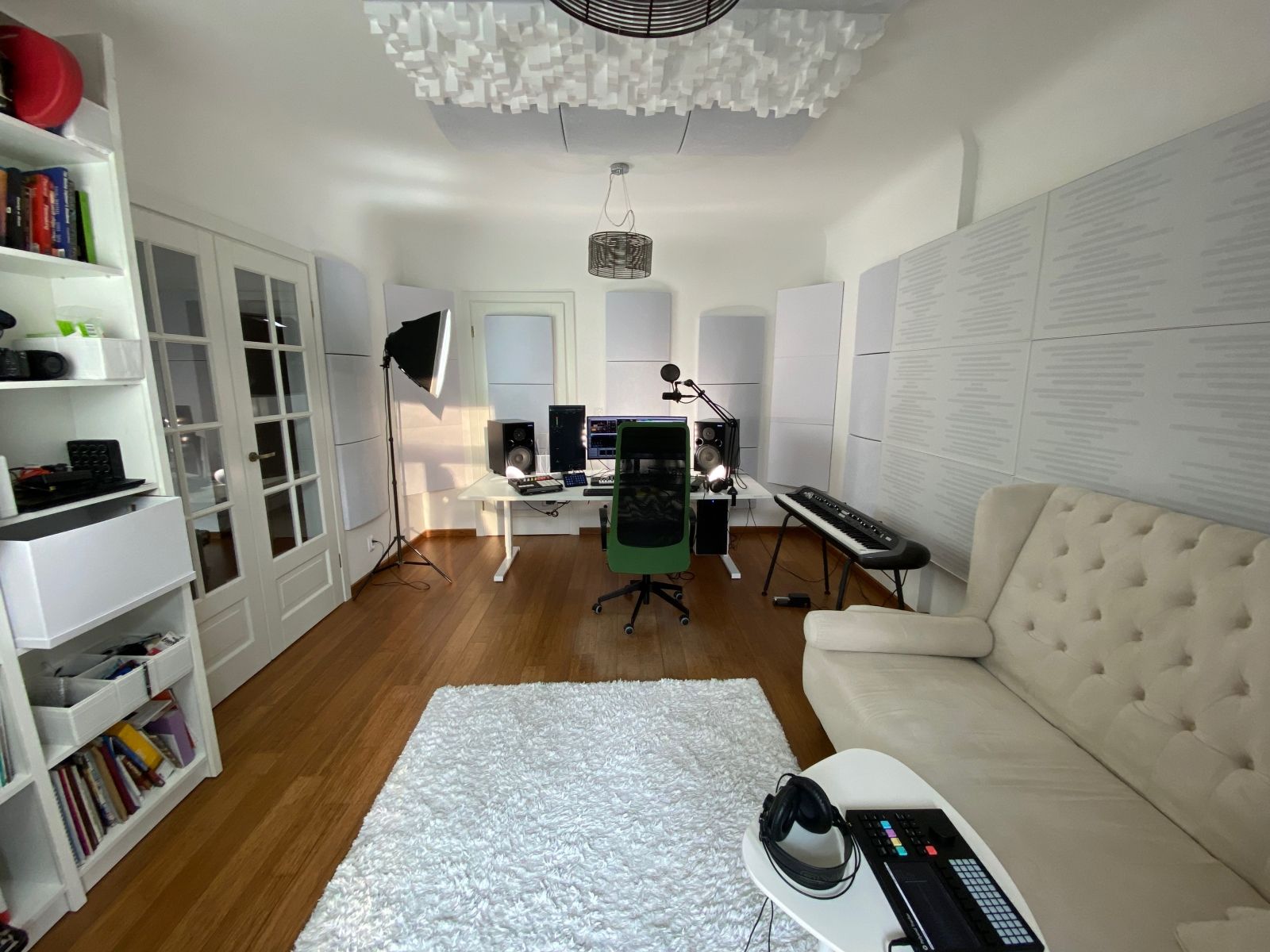
- Home Studios: Whether for music production, podcasting, or voice recording, home studios benefit from controling sound reflections and improve recording quality.
- Conference Rooms: Room acoustic treatment improves speech intelligibility and communication by reducing echoes and excessive reverberation.
- Classrooms and Educational Spaces: Good acoustic conditions in classrooms ensure that students can hear clearly and educators can maintain a comfortable speaking volume without straining their voices.
- Gymnasiums and fitness studios often have high levels of noise and reverberation, and require a more comfortable environment for workouts and classes.
- Restaurants and Cafes: Dining areas can prevent excessive noise buildup and have a more pleasant dining experience for customers by using acoustic treatment.
- Offices: Minimizing external noise distractions and improving audio quality for virtual meetings and conference calls in office spaces is essential.
- Theatres and Auditoriums: Large performance spaces require acoustic treatment to ensure clear and balanced sound for both performers and audiences.
What are the benefits of room acoustic treatment?
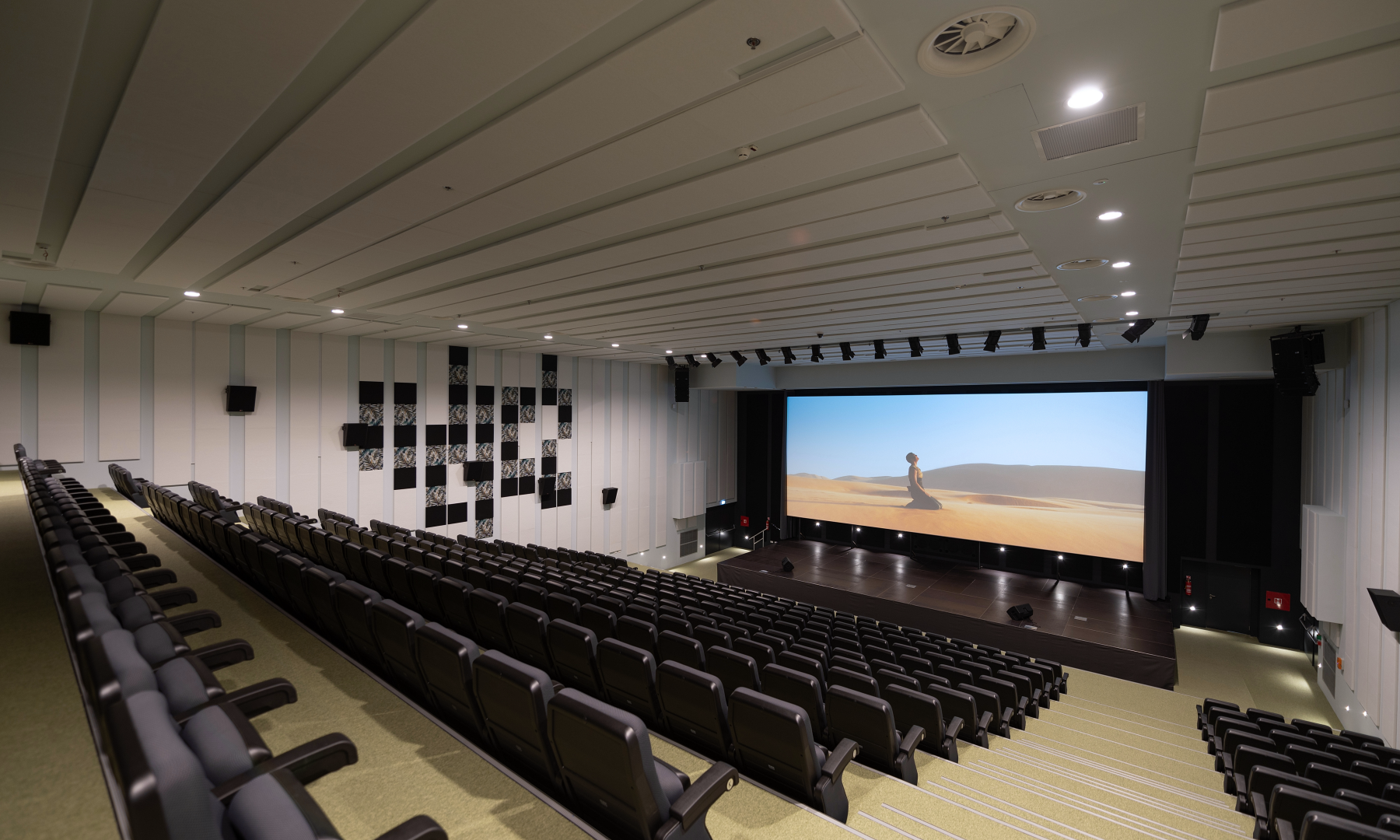
Room acoustic treatment offers a wide range of benefits that significantly enhance the sound quality, comfort, and functionality of a space. Here are some key advantages of implementing effective solutions:
- Improved Sound Quality: It minimizes unwanted reflections and resonances, resulting in clearer, more accurate sound reproduction.
- Enhanced Speech Intelligibility: In spaces where clear communication is essential, such as conference rooms and classrooms, acoustic treatment reduces background noise and reverberation, making speech easier to understand.
- Balanced Frequency Response: Treating room modes and uneven frequency response leads to a more even distribution of sound energy across different frequencies. This results in a more neutral and balanced listening experience.
- Minimized Echoes and Distortions: Acoustic panels and diffusers help control echoes and reflections, preventing sound distortions and creating a more focused and immersive sound environment.
- Reduced Reverberation: Room acoustic treatment reduces excessive reverberation, improving sound clarity and enabling listeners to hear individual sound elements more distinctly.
- Comfortable Communication: Spaces like restaurants and cafes may need to reduce noise levels, creating a more comfortable and pleasant atmosphere for conversations.
- Enhanced Virtual Meetings: With the rise of remote work, it is relevant to improve audio quality during virtual meetings by reducing echo and background noise.
- Professional Aesthetics: Acoustic panels and diffusers can be designed and customized to blend seamlessly with room decor, enhancing the visual appeal of the space.
Is there an all-in-one room acoustic treatment solution?
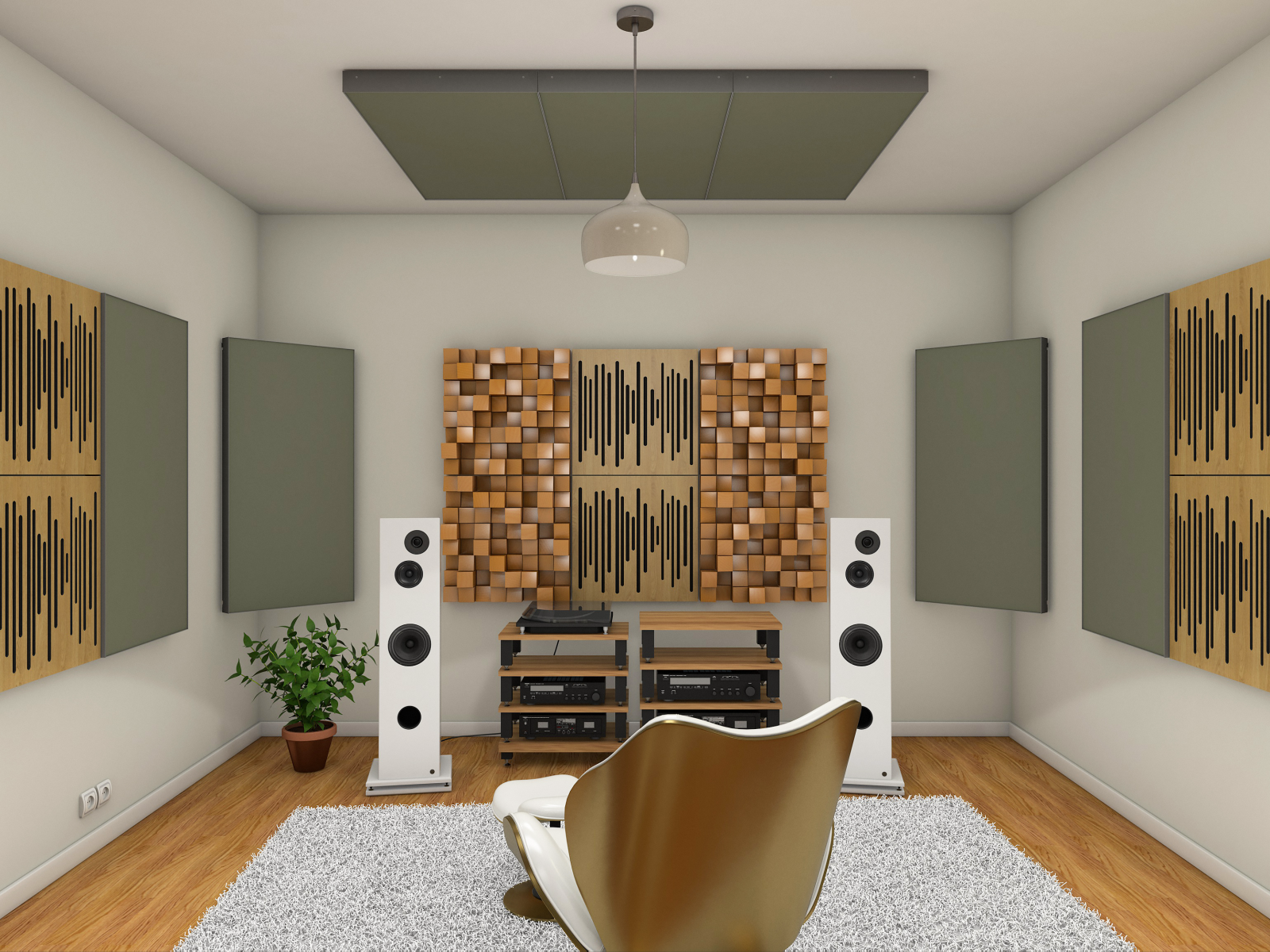
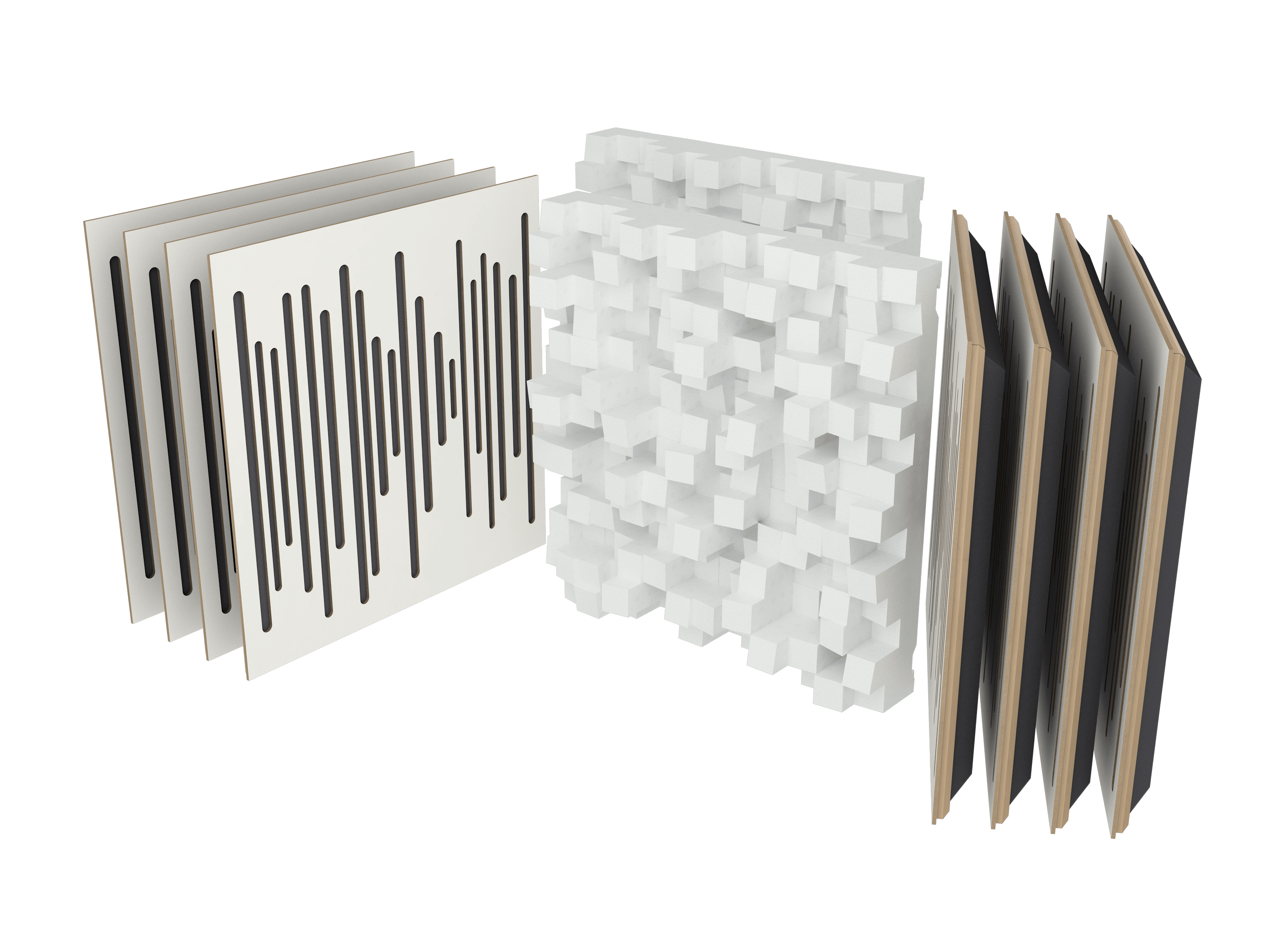
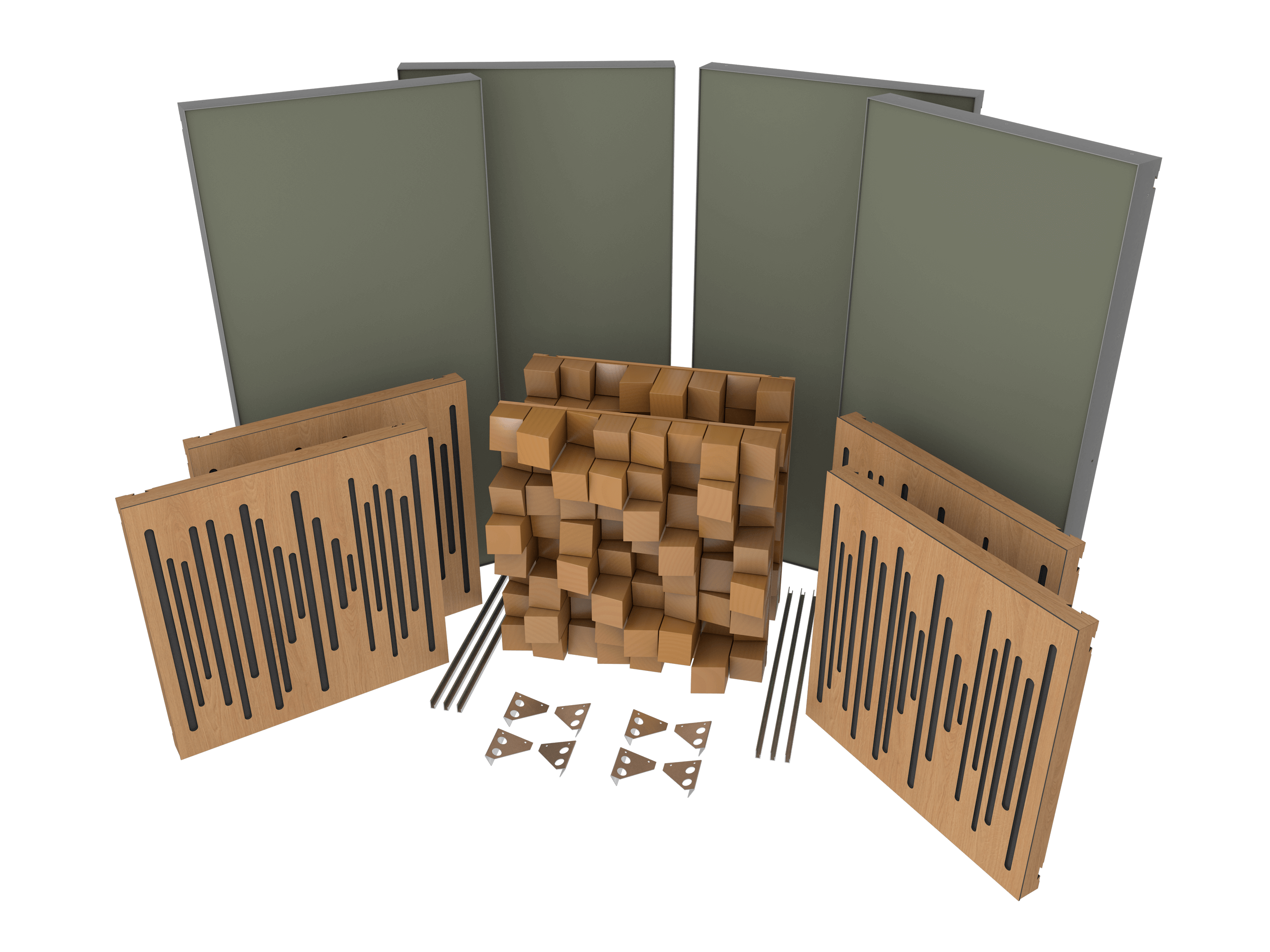
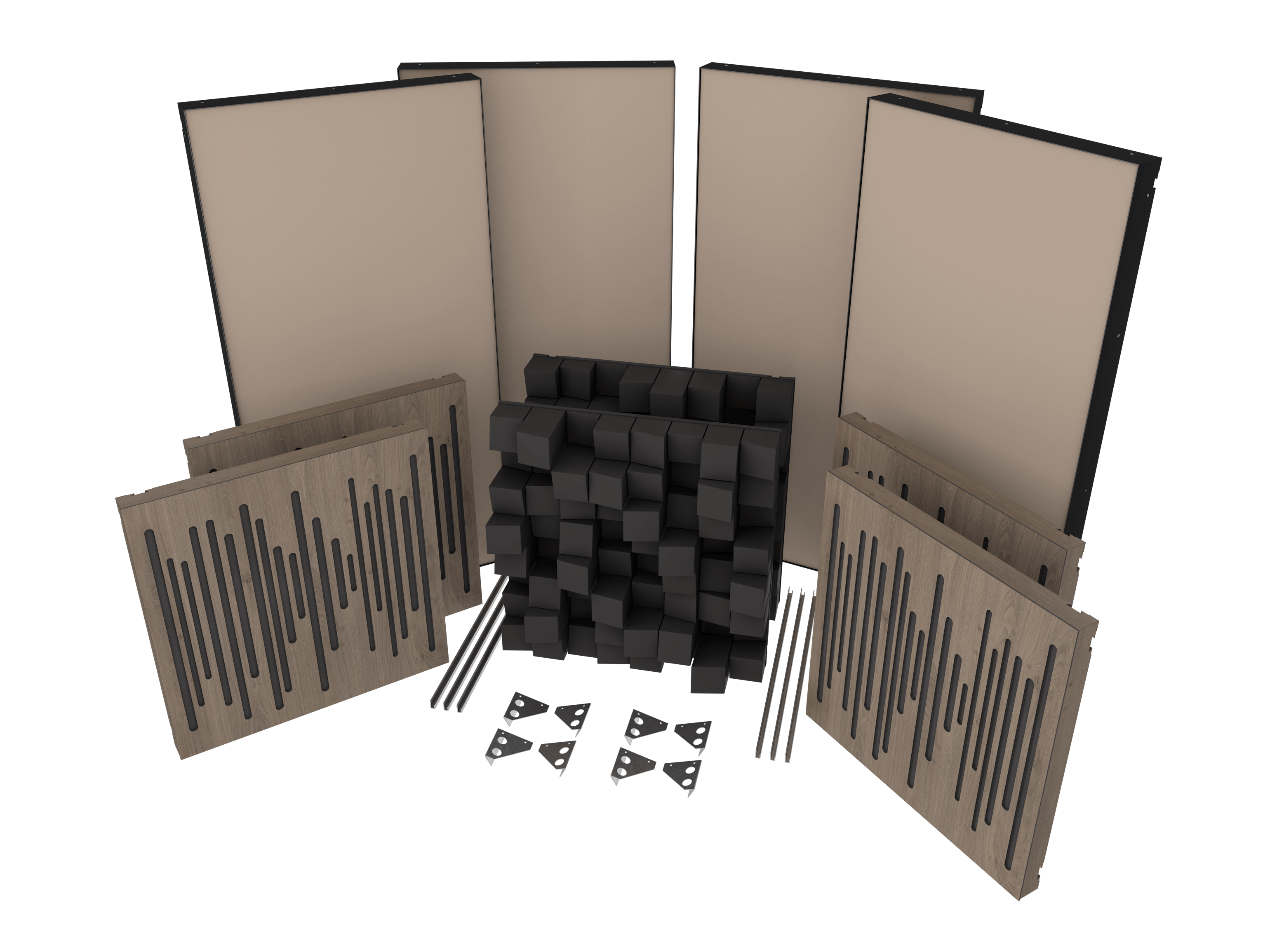
While there isn't a single "all-in-one" acoustic treatment solution that can address every possible acoustic issue in a room, there are comprehensive acoustic treatment kits and systems that provide a well-rounded approach to improving room acoustics. These kits often include a combination of absorption panels, bass traps, and diffusers designed to work together for a more balanced and effective acoustic treatment.
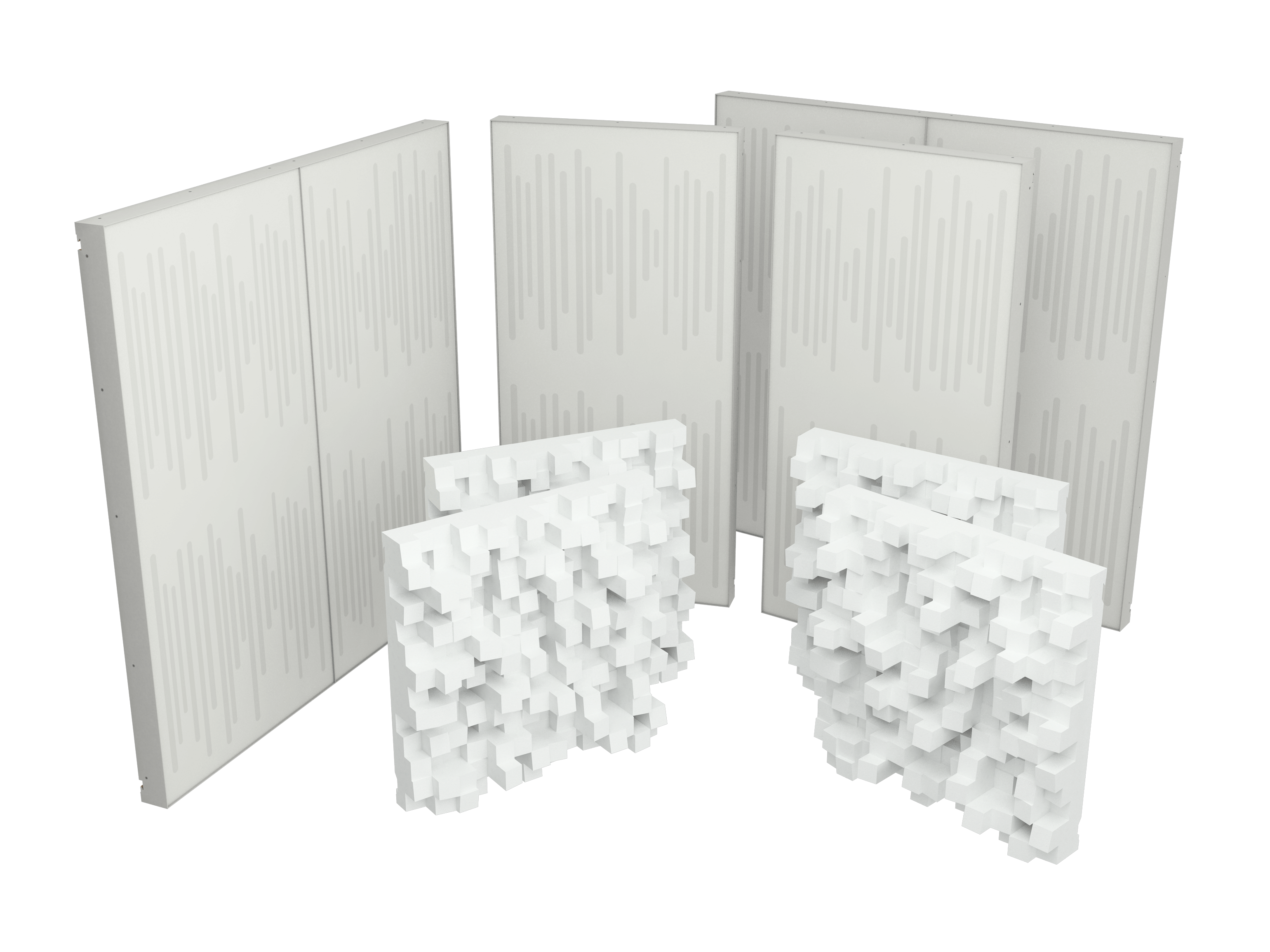
- VicStudio Box: Consisting of one single box containing sound absorbers and diffusers, VicStudio Box is an acoustic kit appropriated to treat a Project Home Studio.
- VicStudio VMT Box: Combining sustainable solutions such as Flat Panel VMT sound absorbers with sound diffusers, VicStudio VMT Box is a complete acoustic kit to treat your Project Studio. Depending on your goals and available budget for the room you may acquire one or several boxes, to reach a more complete room acoustic treatment.
- VicCinema VMT Kit: An acoustic kit developed to maximize the acoustic conditions of a Home Cinema, the VicCinema VMT Kit is available in two options: a kit with acoustic panels for sound absorption and diffusion to be installed on walls and ceilings, and a bass trap kit to finish the low-end frequencies treatment in the corners.
- VicAudiophile VMT Kit: This acoustic kit was developed for audiophiles who wish to get the best audio experience in a hi-fi room, with a complete room acoustic treatment solution for sound absorption and diffusion.
For a more professional approach to the selection of acoustic panels for a complete treatment of a room, you should request advice from experts. See how you can request a project from Vicoustic's team of acousticians and designers.